
Robert Hounam, Dippie Dixon and 'The Valley Remembers'
Tuesday, 7 June 2022
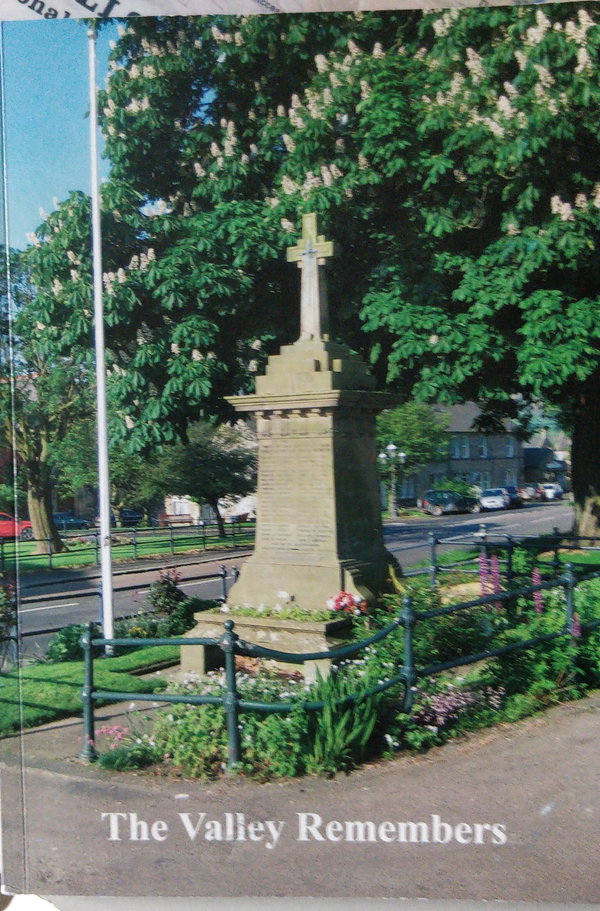
'The Valley Remembers' is a WWI Centenary book, produced in 2014 by Sandy Hunter and his team of researchers, Duncan Glen and Freda Walker.
When Duncan told me he had discovered another important chestnut tree, at a faraway war memorial, I felt inspired to write about Robert Hounam. This soldier's name is inscribed on both war memorials.
This story is about the tree, and two young men it witnessed leaving Rothbury, and who never returned. You can listen to some of this story, voiced by Air Vice-Marshal AFC Hunter CBE AFC DL, on the Rothbury Tree Trail. The following is an article which tells a little bit more of the story.
I am indebted to many people for their help. (Any errors are my own).
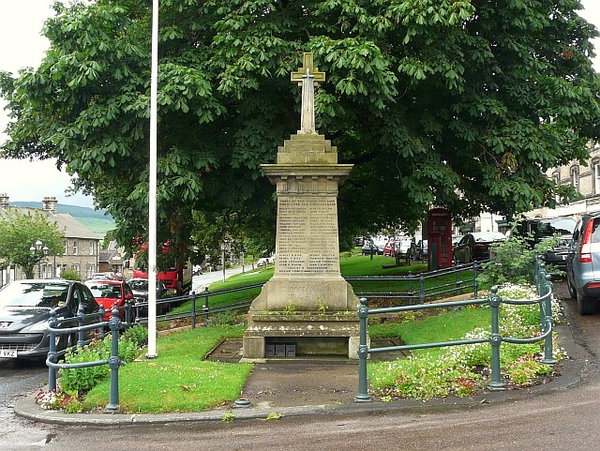
If this wonderful horse chestnut tree could talk, he would no doubt swell with pride at the remembrance of his origins. He was planted in 1858, along with other species, on the main street, to 'beautify the village', by the Rector, Charles Harcourt.
Every year of this tree's life would be of interest, but some things this tree has seen are of particular significance.
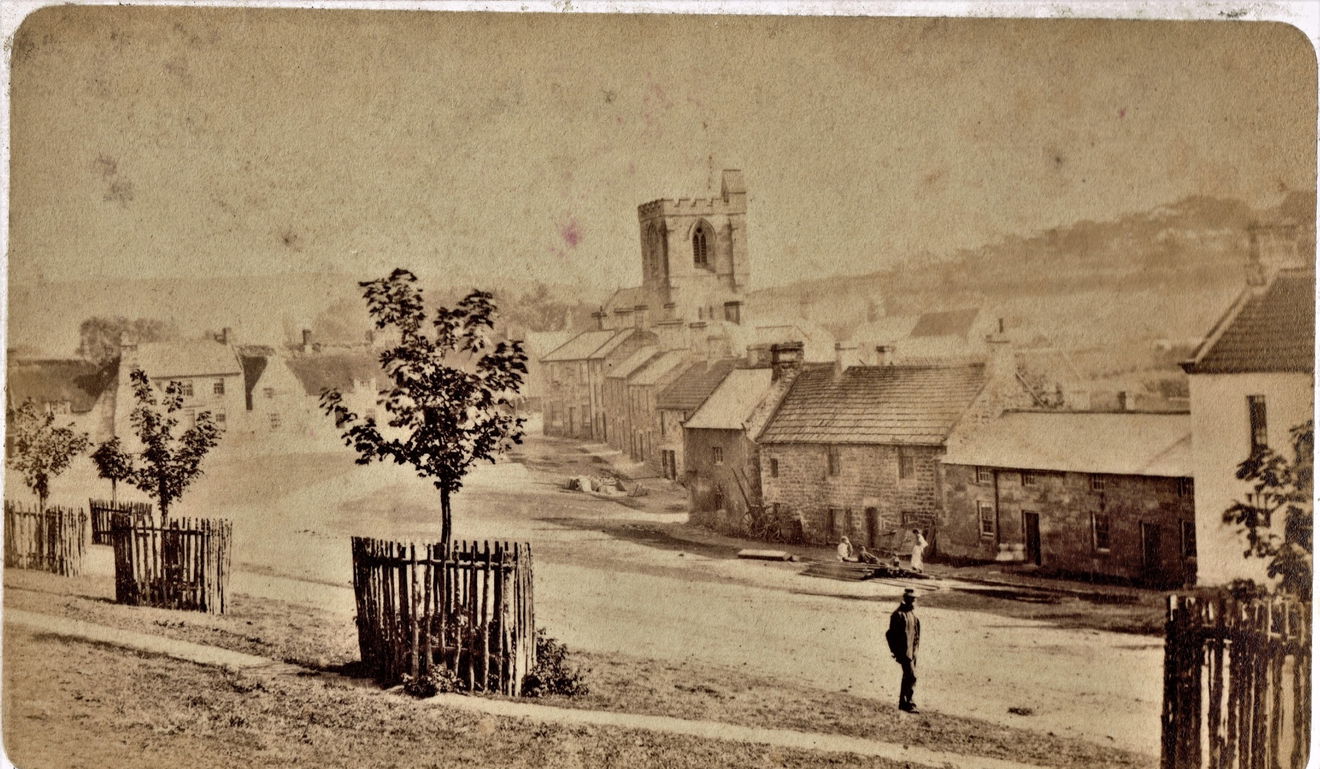
Four years after being planted, our Chestnut sapling was gaining height and girth, with some roots now growing towards Coquetdale House. This building, now the Vale Café and what was the Co-op, was where William Dixon opened his second drapery and grocery shop (the first being in Whittingham). He called it Dixon and Sons; one son being David Dippie Dixon.
Dippie, of course, was a great writer, and researcher, who went on to author the wonderful histories of Coquetdale and Whittingham.
After marrying Mary Hindhaugh in 1869, Dippie and his brother John, oversaw the shop, and they called it Dixon Brothers. Besides drapery, the shop was now also a tea dealer, stationer, bookseller and newsagent.
A year later, Mary and Dippie had their only child, William.
When our tree was about 12, and William 15, Robert Hounam was born.
Robert was one of John and Ada Hounam's six sons. There was also a daughter, affectionately known as Dossie.
The family lived at Prospect House in Rothbury.
Still a young tree, our chestnut would have watched the young Robert as he took on an apprenticeship at Dixon Brothers, having previously been a servant at Star House, an Inn, (now holiday accommodation). I expect William and John would have taught Robert all he needed to know to become a draper, and he worked for them during the five years of his apprenticeship.
In 1910, however, the store suffered great financial difficulties, and the following year it was handed over to the auditors.
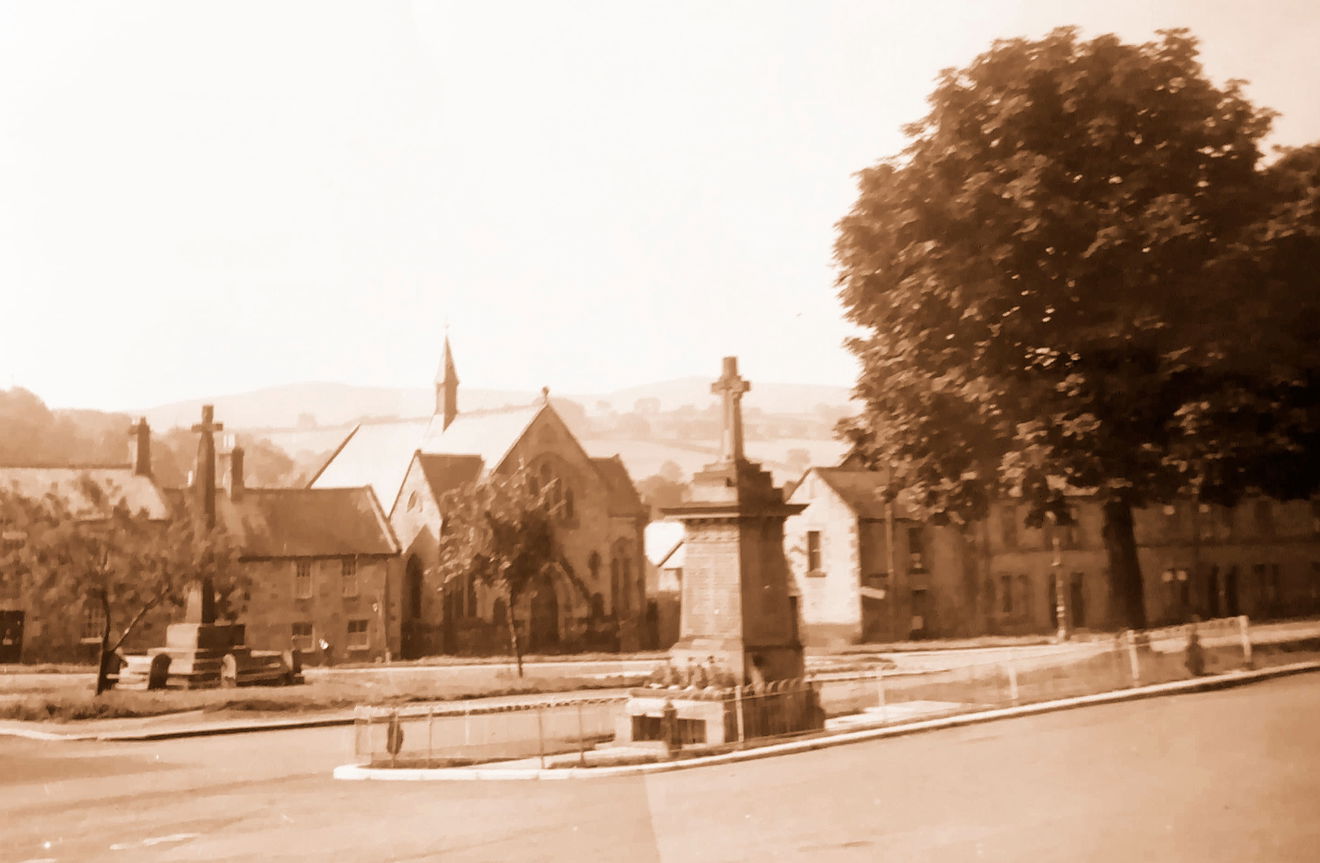
William Dixon also made a new life for himself in Australia. His future turned out a lot differently from Robert's, who our story continues with.
Arriving on the ship 'Suevic' (White Star Line) Robert soon met, married, and set up home with Phoebe Tallack, and they had a daughter, Joan.
Robert's new life, however, was to change tragically as WW1 began in July 1914.
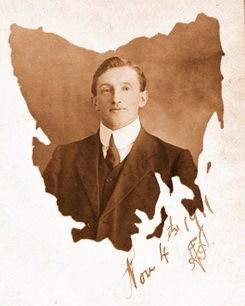
The war raged on; Phoebe signed up for the Red Cross, and Robert enlisted in September 1915. He was made sergeant within a year, and, I am saddened to report, he was one of many 1000s of Australian soldiers who died in the Battle of the Somme.
There is a plaque in the town of Poziere which states:
“Australian troops fell more thickly on this ridge than on any other battlefield of the war." An Australian soldier, Jack Bourke, spoke for many: “Why go to war with one another? With these men we have no quarrel. This struggle may teach us something about history”.
I'm not sure if it did...
Back in Rothbury, Dossie Hounam, like Phoebe, had also joined the Red Cross. Dossie kept the precious letters sent to her from her brothers, all active in the war.
Robert's body is buried in the Military Cemetery in Flers, France.
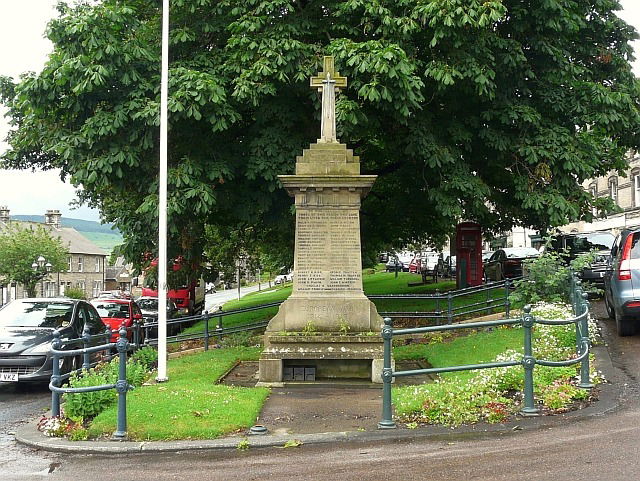
His name is remembered here in Rothbury, forever, as it is engraved on Rothbury's memorial to the war dead.
This is not the only memorial for him.
In 1921, as our Chestnut tree watched the erection of the Rothbury War Memorial, he may well have wondered what the humans were commemorating?
Maybe he would share Jack's incredulity of young men senselessly crossing the planet to fight and kill and be killed.
Or perhaps, hearing the words of Lord Armstrong, exhorting the young men of Coquetdale to enlist, and not be 'cowards', he felt differently?
There is another Horse Chestnut tree which may well look on with love and sadness at Robert's name, on another memorial, far away.
This tree was planted in Burnie, Tasmania.
It grows by the side of a blue granite obelisk - a monument to the memory of the local soldiers who died in action during WW1. The Burnie monument was created in 1923, from an unusual rock quarried locally.
The Rothbury monument similarly is made with local stone from our Denwick Quarry.
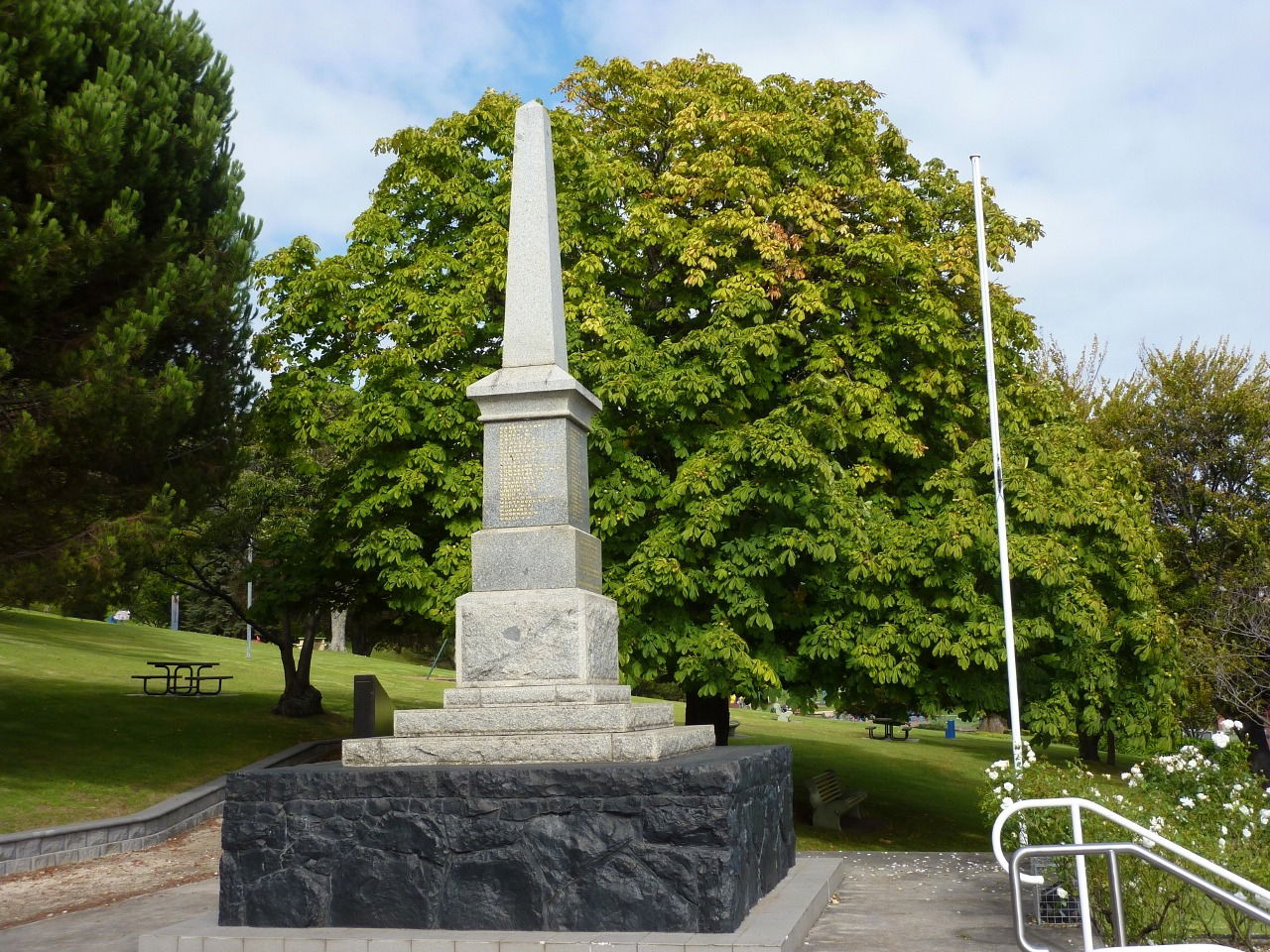
The Burnie Monument.
Two spectacular horse chestnuts protect and care for the memory of a young Rothbury man, who died long before he should have done.
As did so many others.
Today our Rothbury Chestnut is probably half way through its life. I think we can agree that the Rector's plan to beautify the town was successful. This stunning tree is, thankfully, healthy, and shows no signs of the bleeding canker, or horse chestnut leaf miner moth, which are threatening other chestnuts throughout the land.
I hope the next 150 years of his life are peaceful.
Afterwards
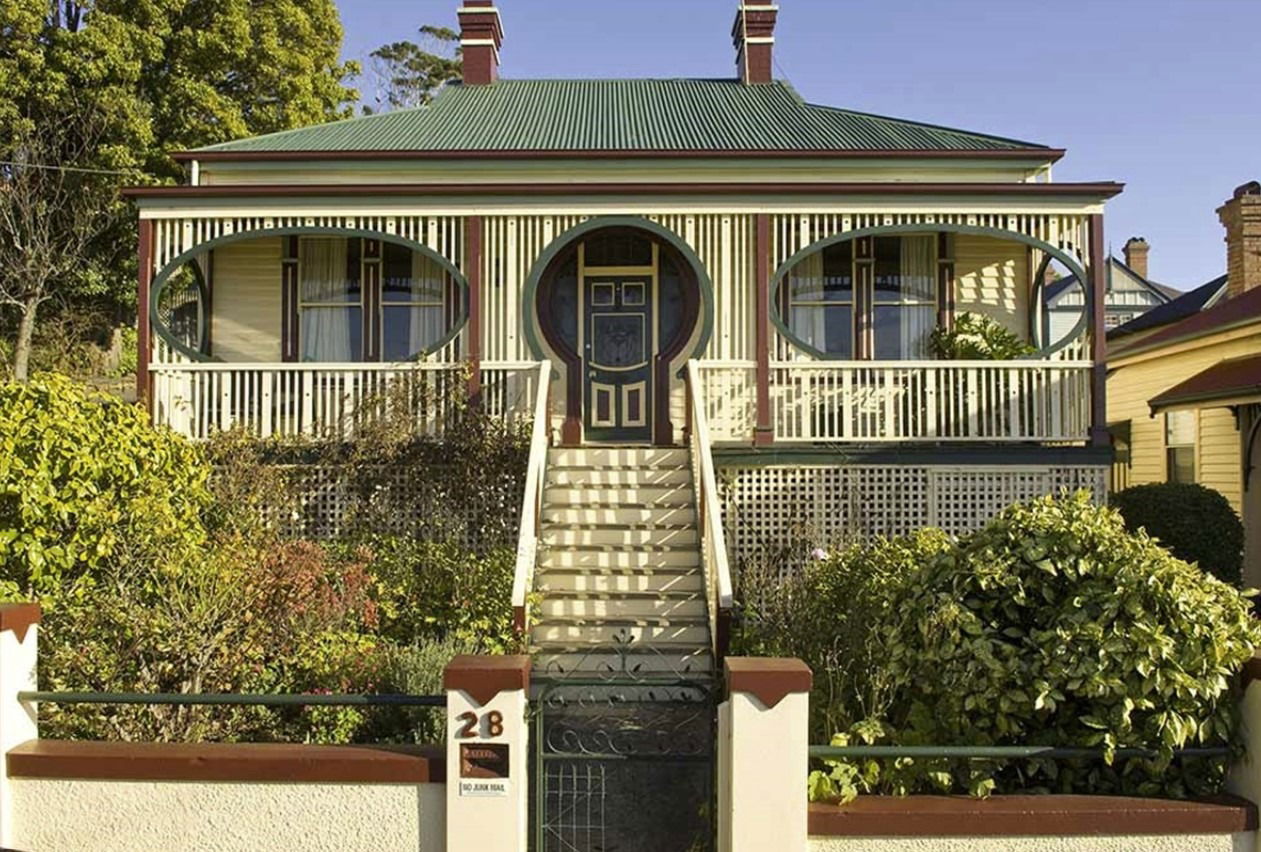
This photograph is of 'Mrs Philpotts' which is now a B&B in Burnie. The house was designed by the grandfather of Robert's daughter, Joan. Joan married Harry Philpott, and this is where they lived. Mrs Philpotts, Tasmania
It was thought that neither William Dixon nor Robert Hounam returned to Rothbury - I have since discovered that this is not the case with Robert Hounam. It was so delightful to be contacted by family members of Sgt Hounam and to be able to put these people in touch with one another was a great pleasure. This is what Robert Hounam's grand-daughter wrote back to me, once I had discovered where she was.
Email to me, dated 7.9.2021
Thanks Katie for your email. I have just been overwhelmed with what has been happening.
This all started when I decided to research my father's family (Harry Philpott) & after a couple of visits to our local Library the volunteer helping my research joined all the dots & realised I was the descendant of Robert Hounam that she was trying to locate. After a few more visits she finally gave me your email etc just this last Monday & I emailed you the next day.
I regret not doing some research into the Hounam Family while my mother was alive, but I didn't have the skills or inclination then. We always leave things until it is too late! I actually only starting using a computer basically about 10 years ago & then learnt more when I started typing out Robert's letters, but am still very much a “learner”.
Another exciting event occurred this week when I was contacted by a Hobart University Lecturer who is going to write a book on the battalions of Tasmanian soldiers who went to WW1 & he is including Robert's 47th Battalion, so I have sent him copies of Robert's letters. If his research goes to print I will send you a copy.
Thank you again for all your work & interest in Robert's story.
Kind regards, love Sue.
This is the email which Sue sent me, once she realised I had been trying to find her.
My name is Sue Ballantyne and I live in Burnie, Tasmania. I am replying to your email about Robert Hounam. I am a granddaughter of Phoebe and Robert.
Their daughter Joan was my mother (I married Eddie Ballantyne in 1966. We have four children and four grandchildren. Sadly Eddie passed away suddenly last year).
When Robert came to Burnie in 1910 he met and later married Phoebe Tallack on the 20th October 1913. Joan was later born on February 28th 1915. Robert enlisted in 1915 and sailed to Egypt in November 1915, where he fought and also in Belgium and France where he later died on the 16th November 1916.
One lovely thing that happened before Robert died was that he managed to go to England in September 1916 and stay with his mother for a few days. I think the Hounam home was called “Prospect House”.
Robert was a prolific letter writer writing about 200 letters and cards to Phoebe and Joan as well as letters to his family in England. Recently I typed out all of Roberts letters and put them in a folder with the post cards, telegrams and train tickets etc. that he sent home. Phoebe has kept everything and that is a blessing. In Robert's letters to Joan he always addressed her as Dear Little Joanie.
Phoebe later married Robert's brother Emmerson on the 3rd April 1920 from where they moved to Victoria to live, leaving Joan with Phoebe's parents Mary and Francis Tallack.
Phoebe and Emmerson had a daughter Beverley and son Colin both deceased. Phoebe died on the 12th October 1948 and Emmerson in 1959.
Joan married Harry Philpott and lived most of her life in Queen Street Burnie, she died 24th February 2006. They had five children Robert-dec, Trevor-dec, Marilyn, John and Sue.
The house where Joan lived in Queen Street was designed and owned by Francis Tallack and given to Joan and Harry after they were married. The house is now a bed and breakfast for businessmen and is called “Mrs Philpotts”.
The house next door was also owned by Francis Tallack and is where Robert and Phoebe lived until Robert went to war. This house is also now a bed and breakfast and is called “The Duck House”.
Phoebe and Joan moved in with Phoebes parents for the duration of the war. Robert had five brothers who enlisted for England and a sister as a nurse in the forces. As far as I know they also fought in France but I don't know how many survived the war
Many thanks to all the people who helped me with the research and photographs for this blog. All errors are my own