
Guest Story: Michael Boxall tells us about his hedge in September
Wednesday, 30 September 2026
According to the weather folk, September 1st is the start of meteorological autumn: nature may or may not agree with this, but certainly the weather turned autumnal, low pressure bringing generally lower temperatures, stronger winds and some rain. This change will undoubtedly be felt, understood and possibly welcomed by the hedge and its inhabitants without needing help from a printed calendar to remind them.
Hawthorn berries, sloes and hazelnuts continue to fill out and ripen, the sloes acquiring their characteristic lovely, misty, milky blue bloom. In spite of the lack of rain during summer they are all producing surprisingly good crops.
Some of the blackthorns now bear leaves which look as though they have been crumpled up like sheets of paper, but I don't know if this is the result of further attack by the same gall mites or another parasite continuing where the first left off.
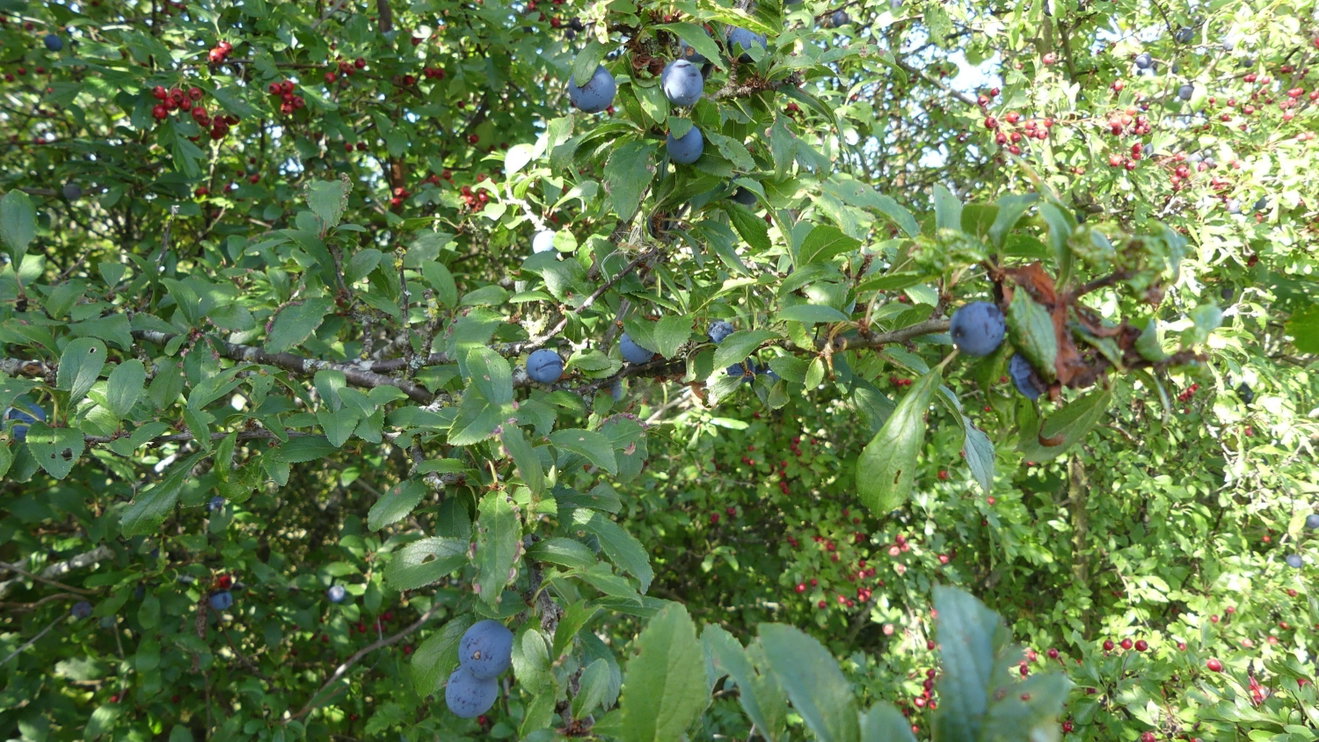
Ripening sloes.
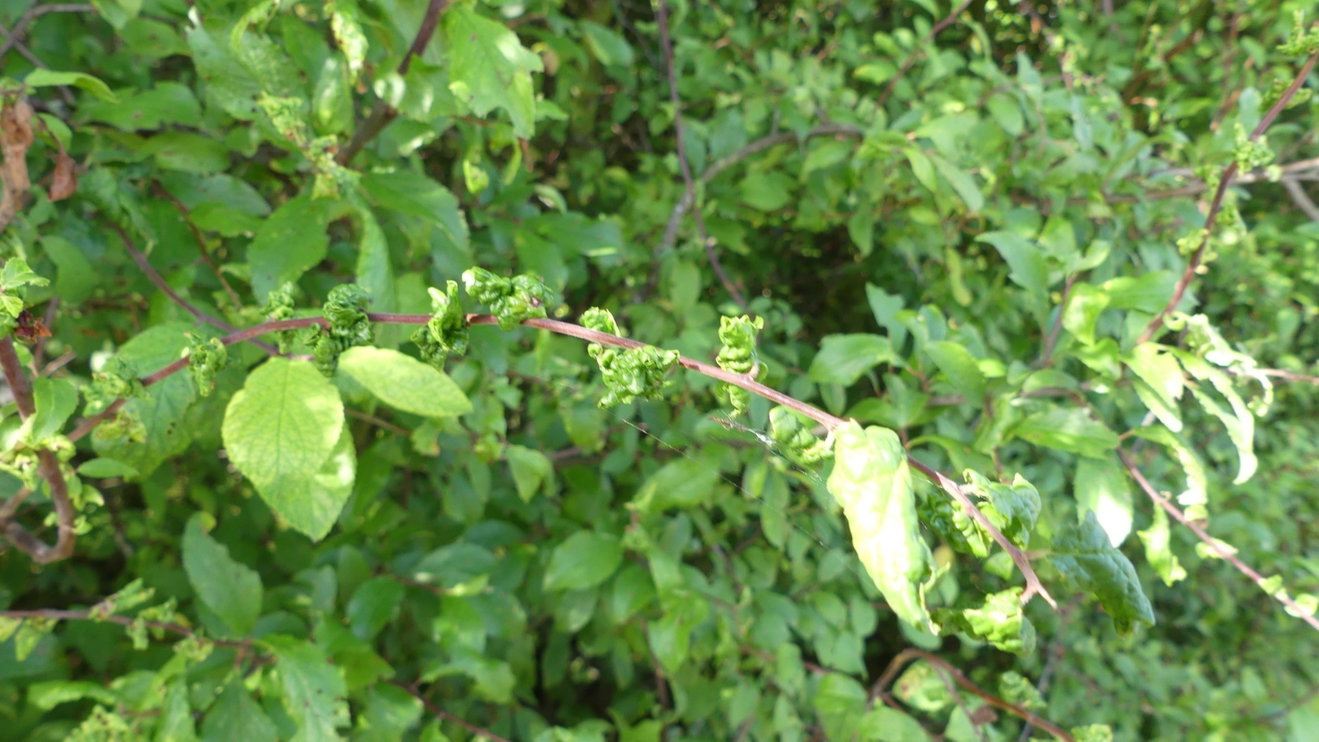
Crumpled blackthorn leaves.
A rather more colourful gall has appeared on one of the dog roses, a Robin's Pincushion, or Bedeguar gall, which can also occur on cultivated roses. This has been caused by a female gall wasp which goes by the scientific name, Diplolepis rosae: she laid her eggs in a bud during spring, which swells and becomes woody on the inside and the larvae develop in chambers within it.
Males are apparently rare and most females are capable of laying fertile eggs without needing to mate.
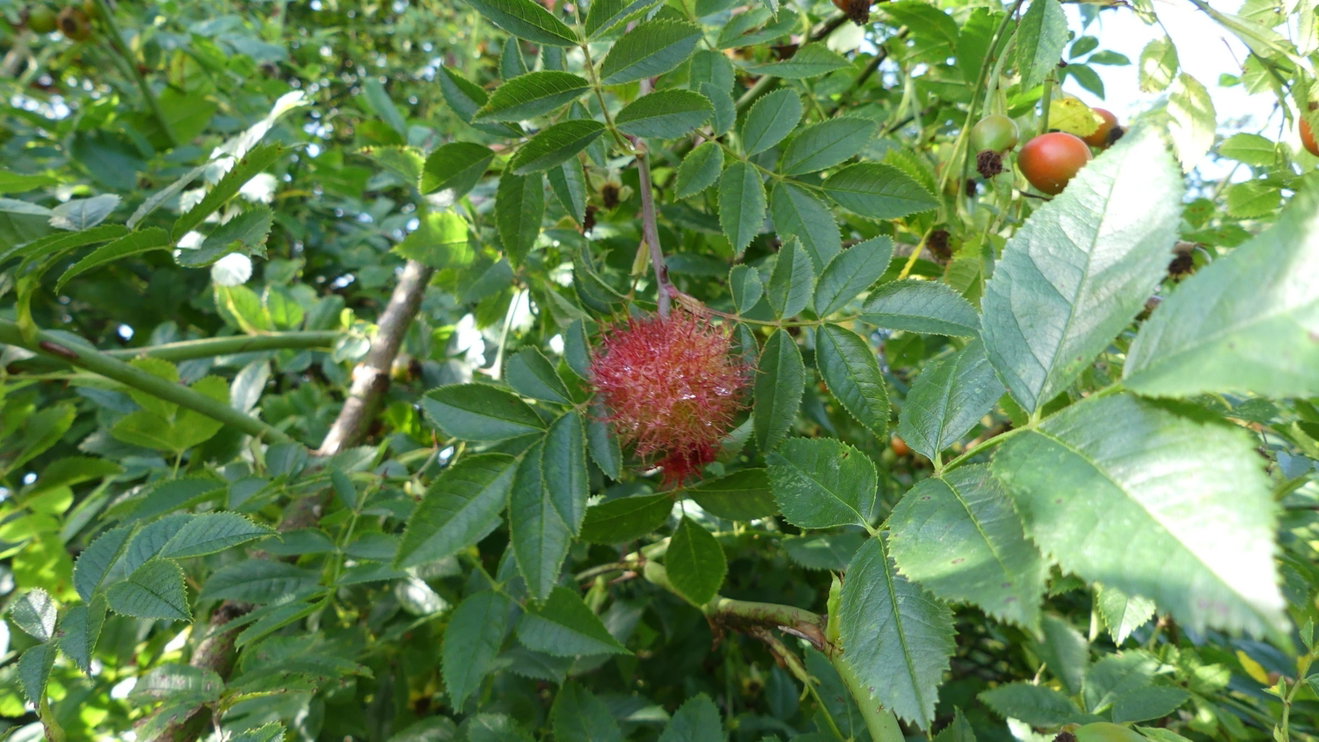
Robin's pincushion.
It isn't only the bushes which suffer attacks from gall causers; stinging nettle also has presumably unwanted guests in the form of gall midges. In common with almost all such tiny creatures the midges have no common name, only a scientific one: Dasineura urticae are responsible for the swellings on these leaves. Mature larvae leave the galls to pupate in the soil and there can be more than one generation in a year
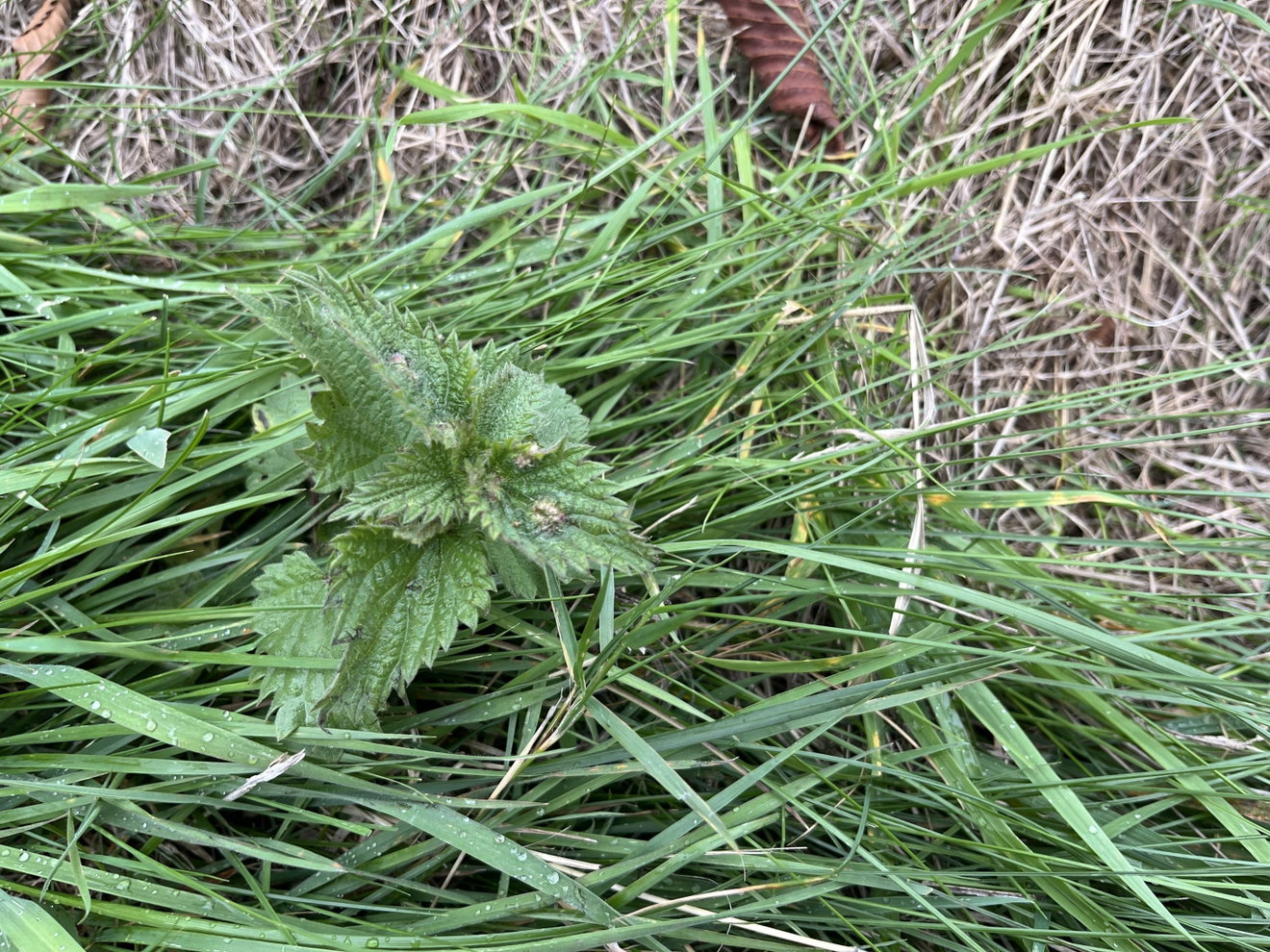
Galls on nettle leaves.
I am fairly certain woodmice, or possibly voles, (not squirrels), have been into the hazels and snipped off quite a lot of nuts, letting them fall to the ground. I picked up several and opened them to discover if they contained nuts or were empty, because squirrels can certainly tell the difference, by weight and possibly smell, and simply drop the empty ones without needing to waste time and energy opening them.
It was a surprise to find most contained well developed nuts, which left little doubt in my mind mice or voles have been doing this because for such small animals it would be considerably easier to deal with them on the ground than attempting to do so while swinging about on a wobbly twig - and they would certainly be a very difficult load to carry down.
Squirrels will usually, and easily, deal with them in the bushes, even if they have to carry them to a more stable position to sit first. The evidence of their feeding is opened shells on the ground under the bushes.
Mice and voles gnaw neat round holes in the shells rather than splitting them apart as squirrels do.
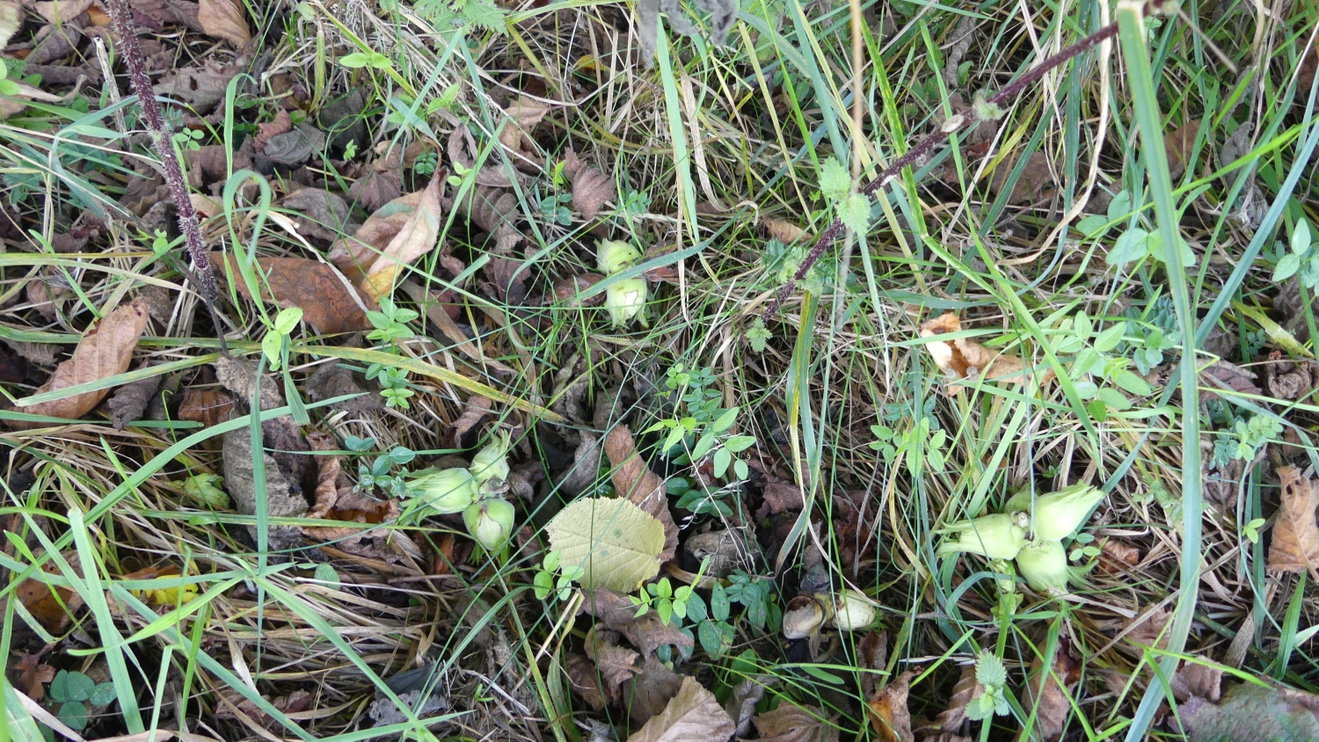
Fallen hazlenuts.
By the middle of the month the bushes were starting to lose their grip on the nuts: as I touched one it fell from its enclosing leafy shuck, but on breaking it open discovered it was still not fully ripe and hadn't acquired the characteristic flavour they possess when fully hard and dry.
My perusal the same day found something rather less desirable: someone had been dumping garden refuse against the hedge bottom, plant material and wilted flowers. While this will rot down and become little more than fertiliser, it is still not an acceptable practise.
The Council operate a garden waste collection service, but surely it would be far more environmentally friendly to compost it in their own garden and use the result to help them grow some vegetables.
With the end of the month in sight and hazelnuts becoming ripe, increasing numbers falling or being cut and let drop I decided to put a trail camera under the hedge close to several of the bushes to see what activity it would record.
Over the course of four days it took 154 photos, of a rabbit and a woodmouse. While the bunny appeared to be doing little other than hopping around and almost posing for it, the little mouse was a bustle of activity, carrying away, no doubt to its store nearby nut after nut.
It repeatedly used the same route which, unfortunately, was across the bottom left corner of the frame, almost out of shot and too close to be in sharp focus; but it proved the mouse didn't feed where it found them, instead putting them away to eat when other food becomes scarce and its mouth is large enough that it can carry them!
Among the fallen I found one which had been opened in the manner I mentioned earlier, by gnawing a hole in both sides of it: look closely at the photo and you can make out the tiny teeth and claw marks. I cannot be sure if it was a mouse or vole which did this.
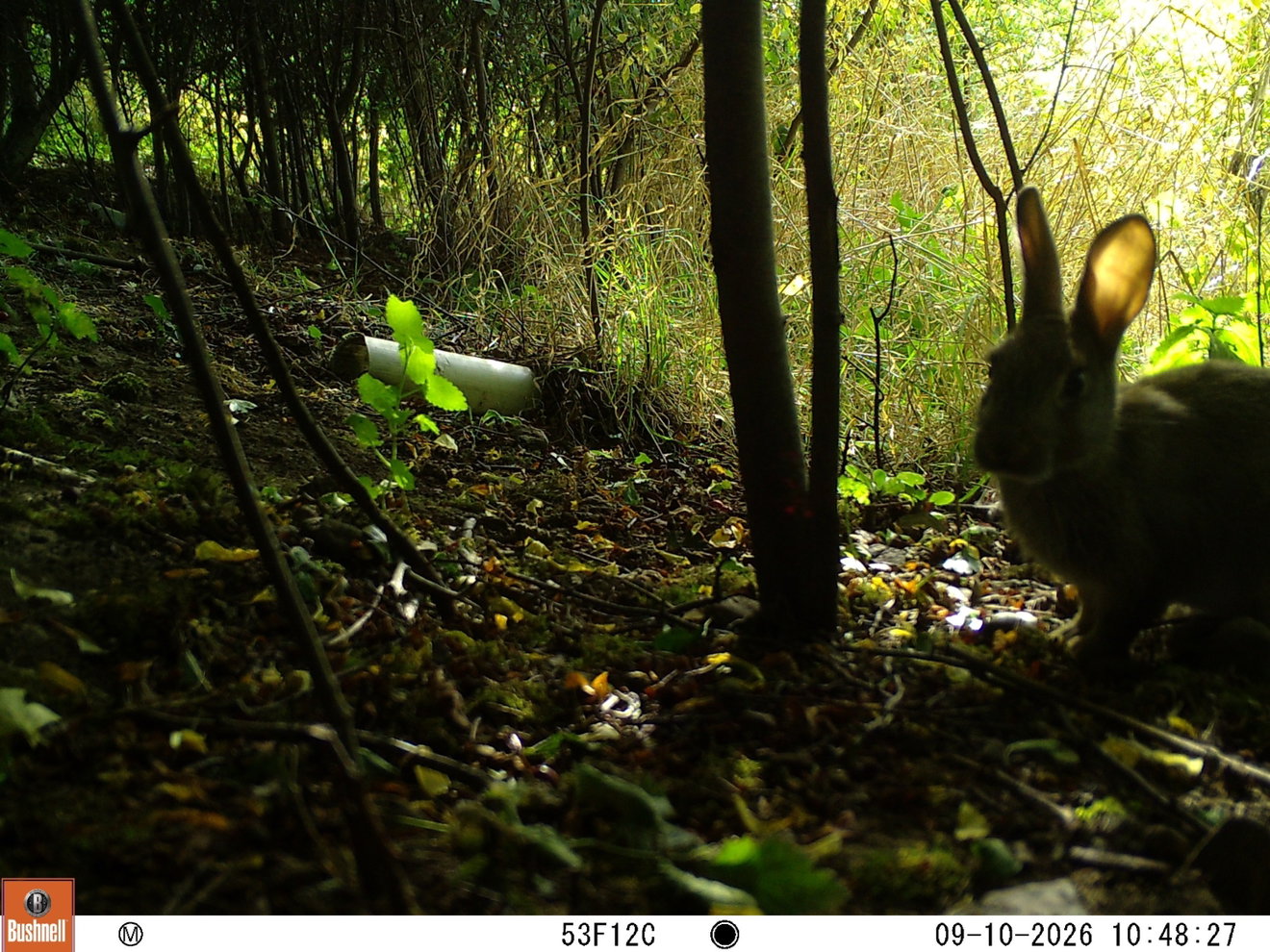
Rabbit.
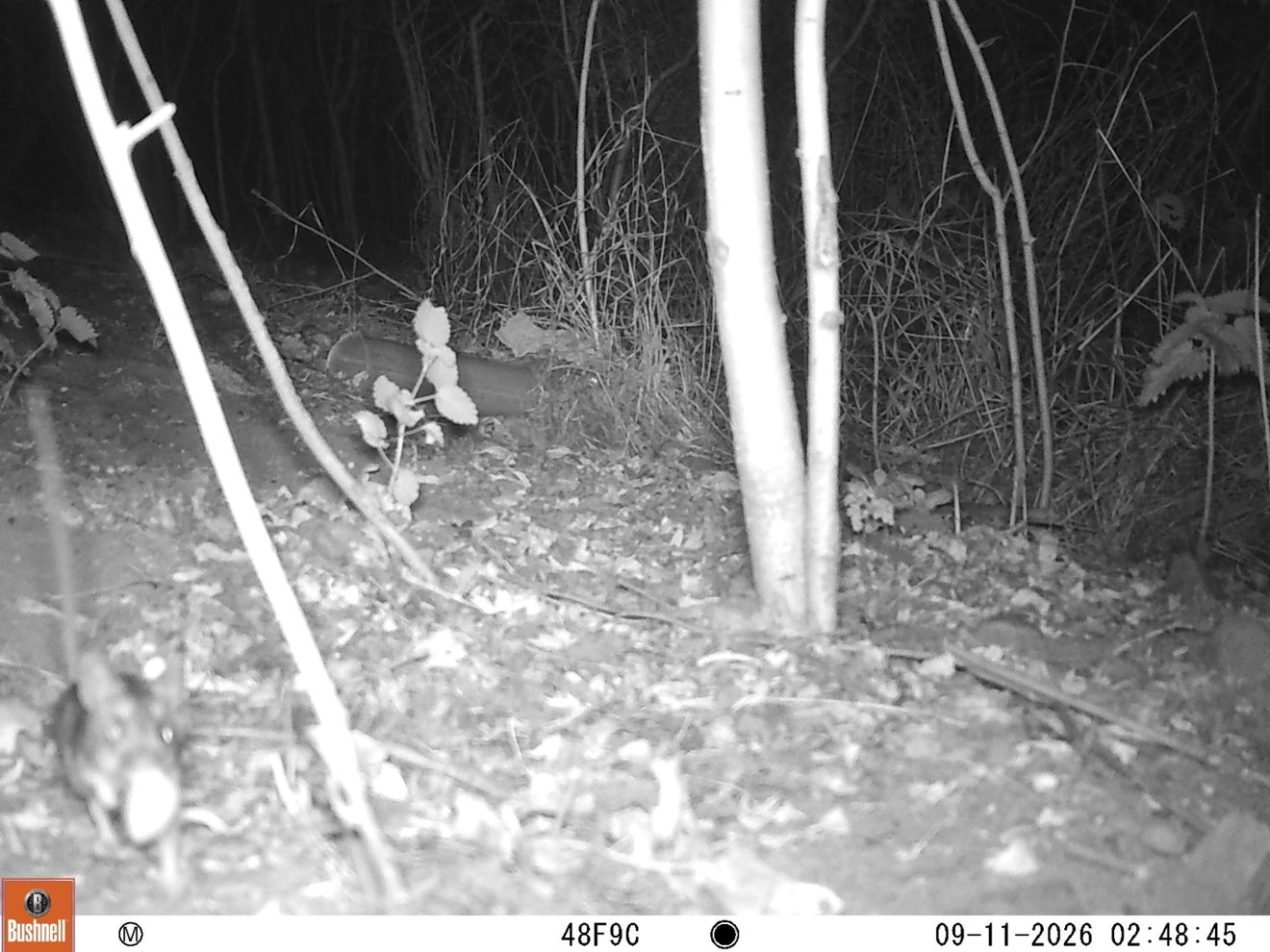
Woodmouse carrying a hazlenut.
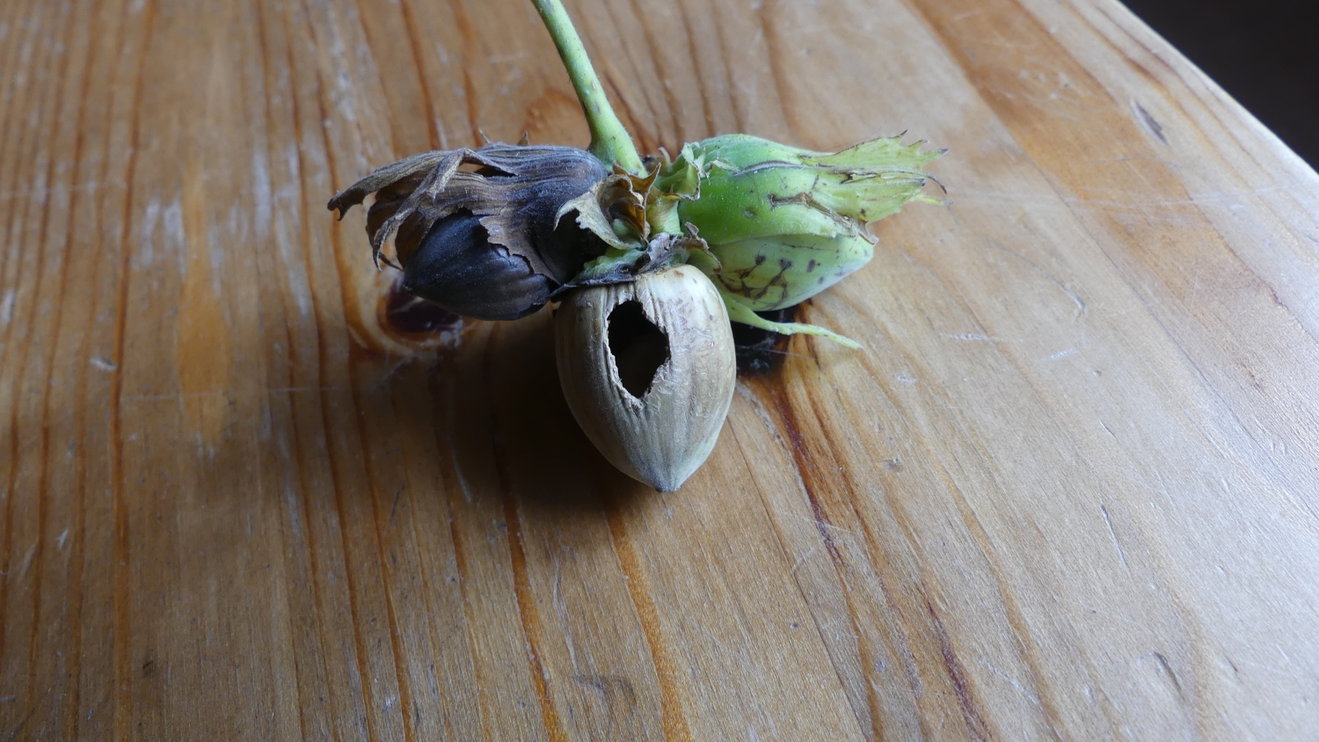
Hole gnawed in a nut.
This time of the year is known as the season of mists and mellow fruitfulness. While it has proven overall to be a very fruitful year for the hedge, in spite of, and possibly due to, the very dry summer, I have so far seen little mist. Although clear nights have resulted in significant dew by daybreak, decorating the many spider's webs with myriads of tiny droplets which shine like ethereal diamonds when the sun's rays touch them.
Not all spiders make webs; there are species which actively hunt and others ambush their prey, but all are small and I rarely see any of them.
Undoubtedly the hedge harbours a wide range of species and collectively they will amount to a very large number, a potential food resource for insectivorous birds and possibly small mammals.