
Guest Story: Michael Boxall tells us about his hedge in October
Thursday, 29 October 2026
Late flowers on a decaying spear thistle show summer is clinging on by its fingertips, but autumn has arrived and begun daubing the hedge with its distinctive rich palette. Though predominantly still the heavy green of summer as the month begins, some of the bushes bear pale yellow leaves, others sprays of deep wine red.
Some are already losing theirs.
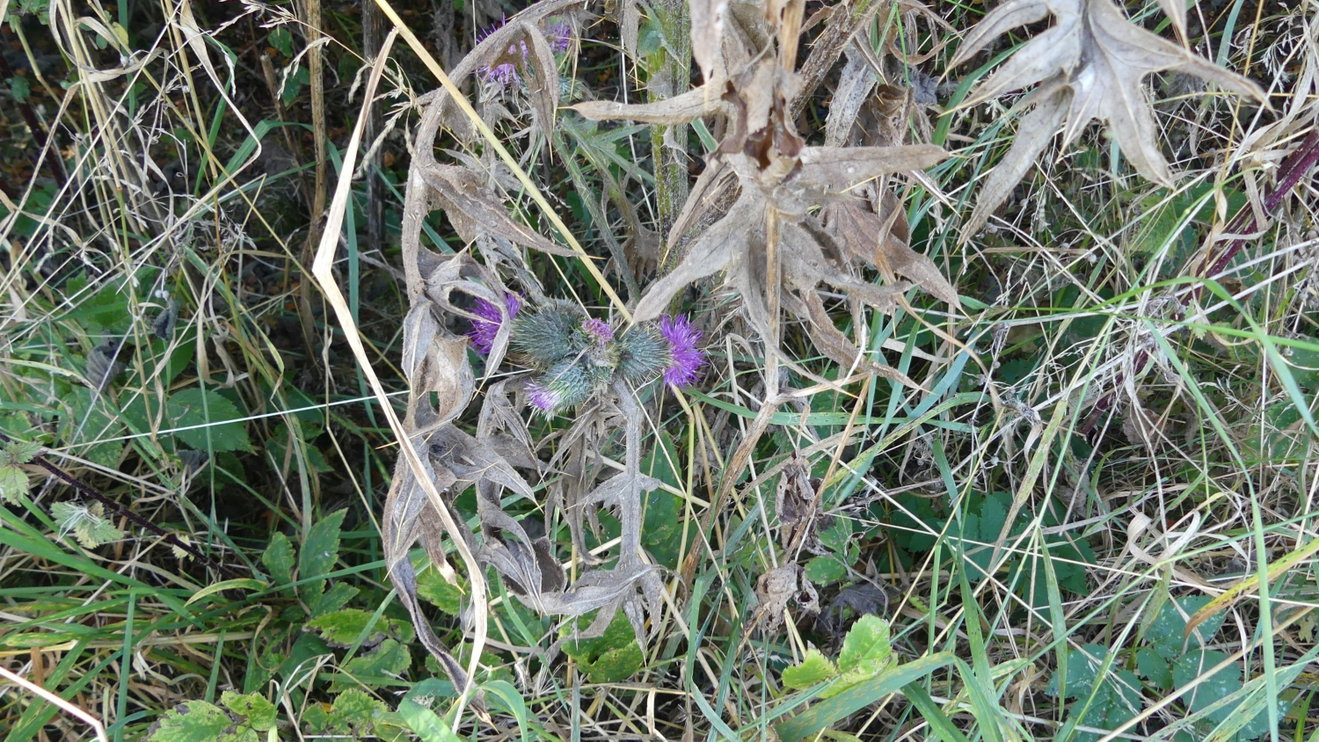
Flowers on decaying spear thistle.
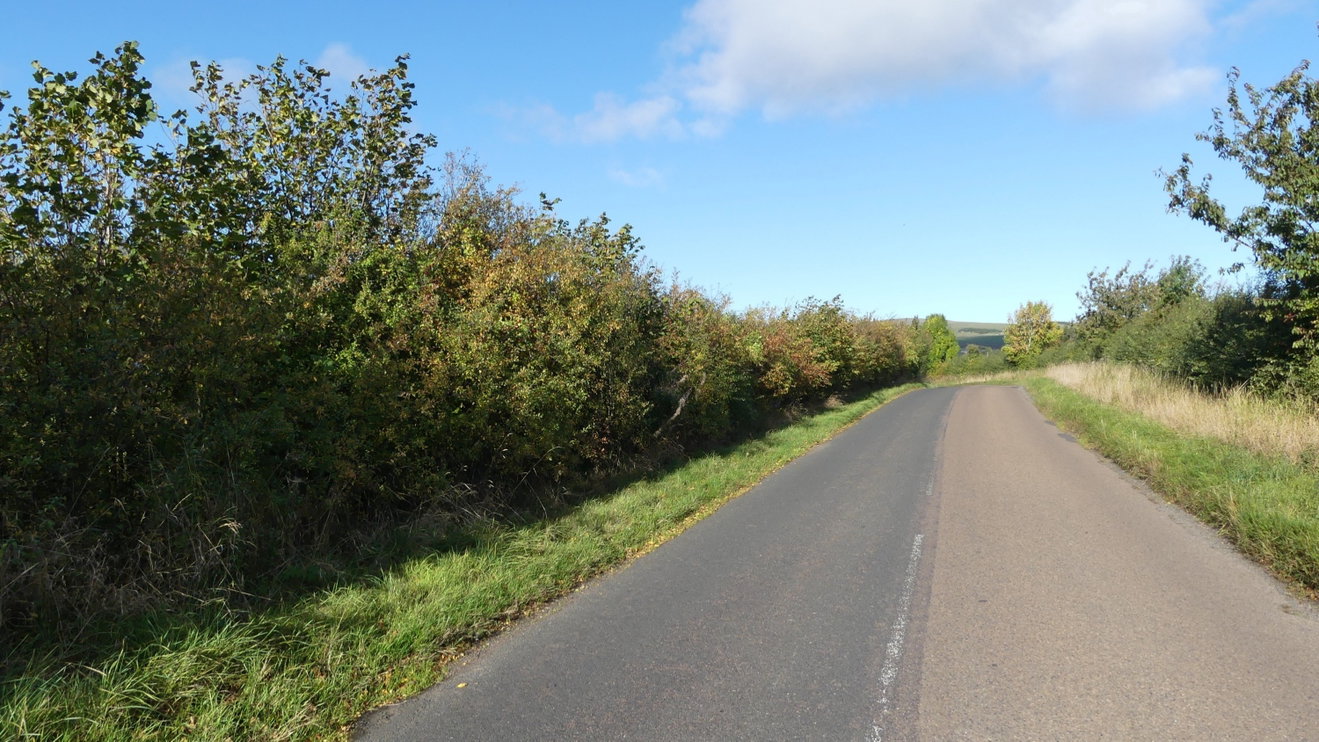
The hedge in October sunshine.
At present signs of three seasons are visible - departing summer in the thistle flowers, autumn in colouring leaves, and male hazel catkins which will lengthen and become yellow with pollen next spring, are already formed.
We compartmentalise a year, but nature operates a continuum, flowing seamlessly from one day to the next, most of the incremental changes too small and subtle for us to appreciate.
A wasp sat for some time, sunning on one of the roses: cooling weather will kill off all but the queens before long and some of these are already seeking hibernation sites in which to pass the winter.
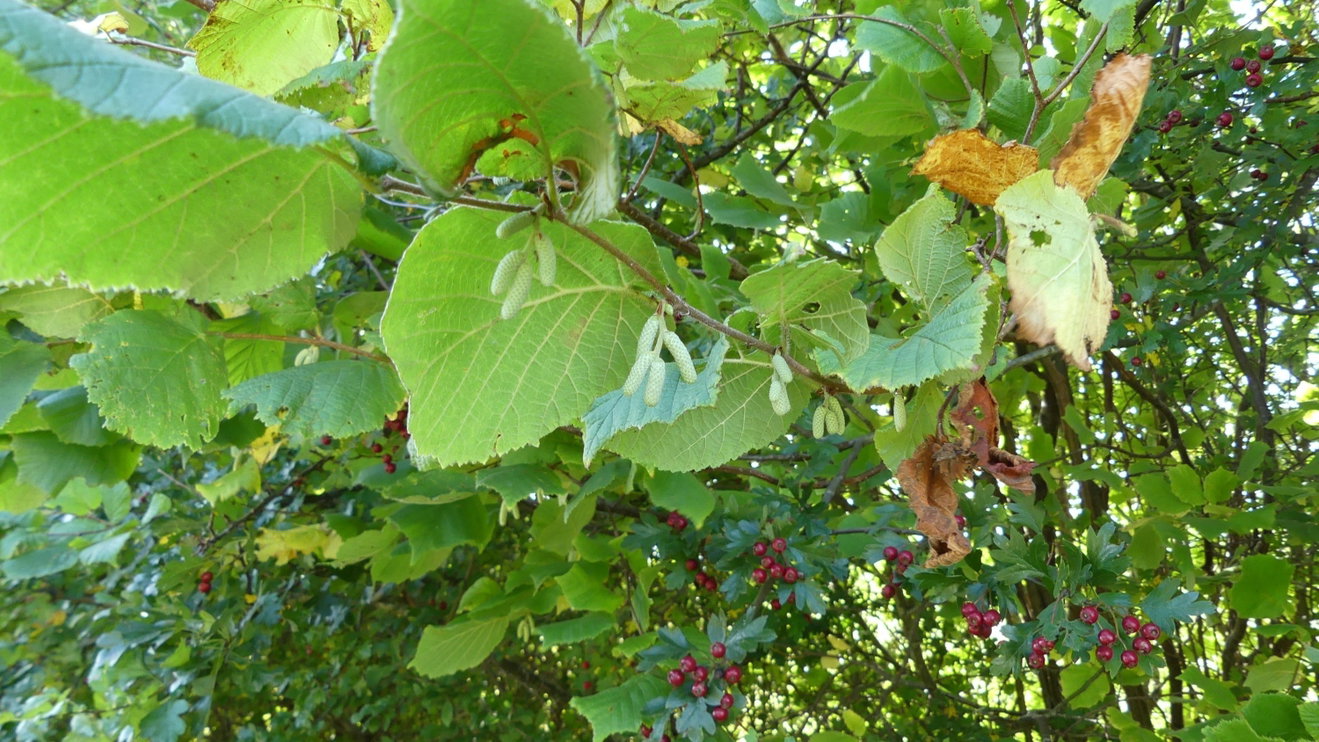
Already formed male hazel catkins.
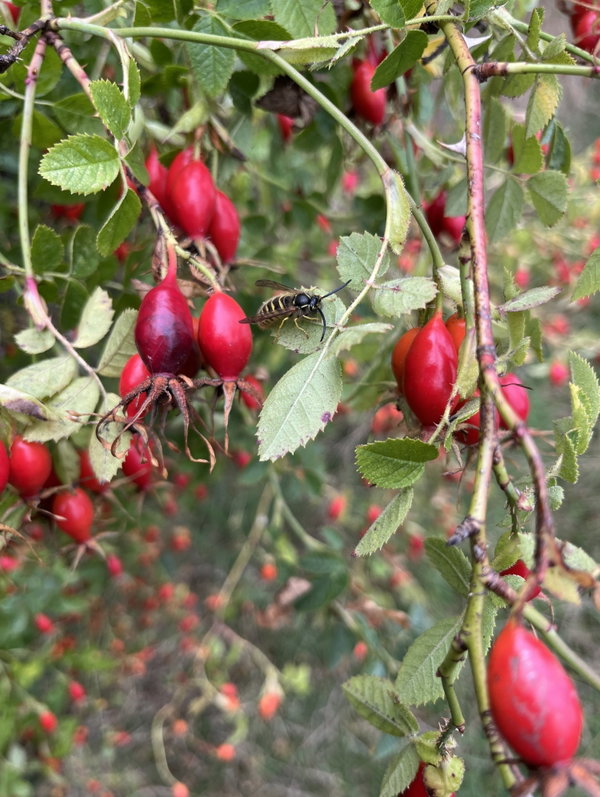
A wasp sunning itself on a rose bush.
By the middle of the month falling leaves created a thin carpet beneath the hedge. This is where fungi, worms, woodlice and other detritus eaters will break them down over winter, and make the nutrients they contain available to be taken up by the bushes when spring comes. This is when they begin growing once more.
They are, in effect, fertilising themselves with what have been their food factories through this recently ended growing season.
The remains of a young fox skull, and a few other parts of its skeleton, are lying among the leaves. They have been there a long time and the skull has been partially gnawed away by mice, providing them a good source of calcium. The most likely cause of death was being struck by a passing vehicle, but not killed outright, and it managed to crawl into cover - but it is impossible now to know for sure.
The animal may have been unlucky, but its body will, like the leaves, have provided food for many other creatures, including carrion beetles and fly maggots, and it will have ultimately increased the fertility of the soil.
In nature nothing goes to waste.
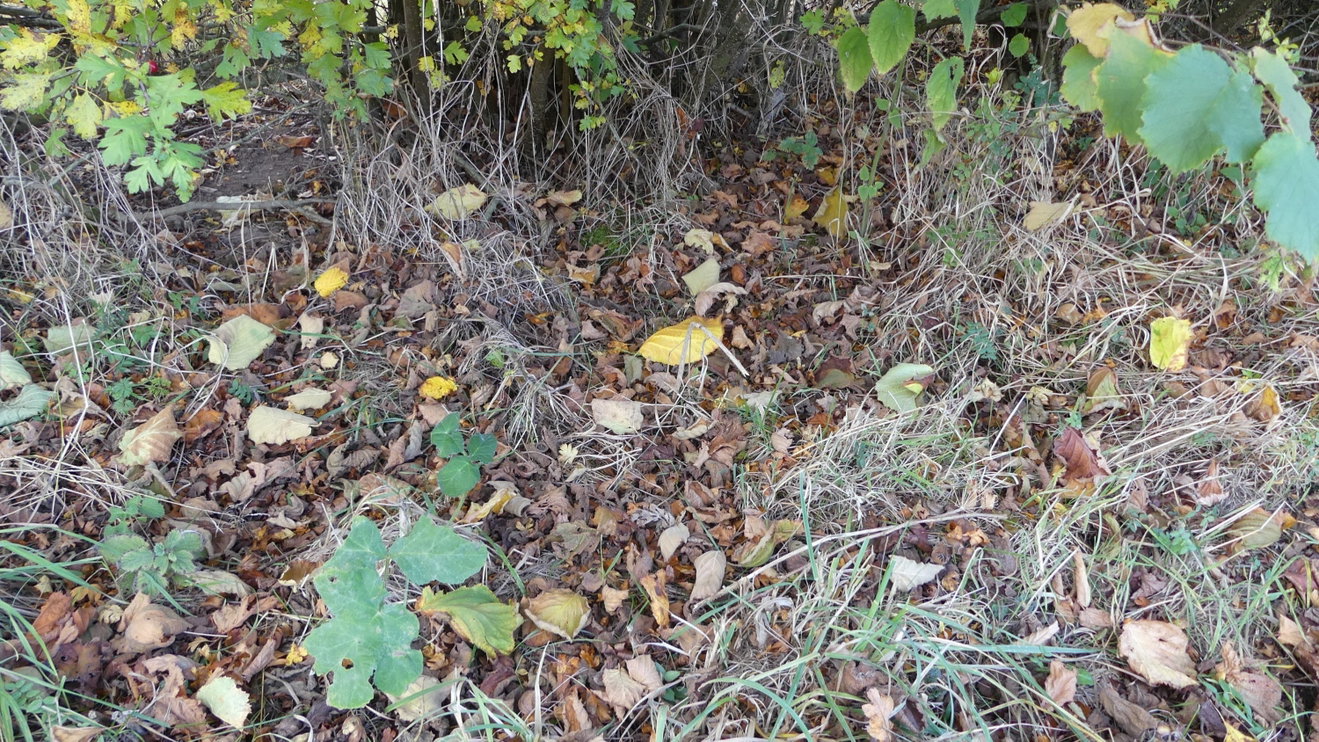
Fallen leaves.
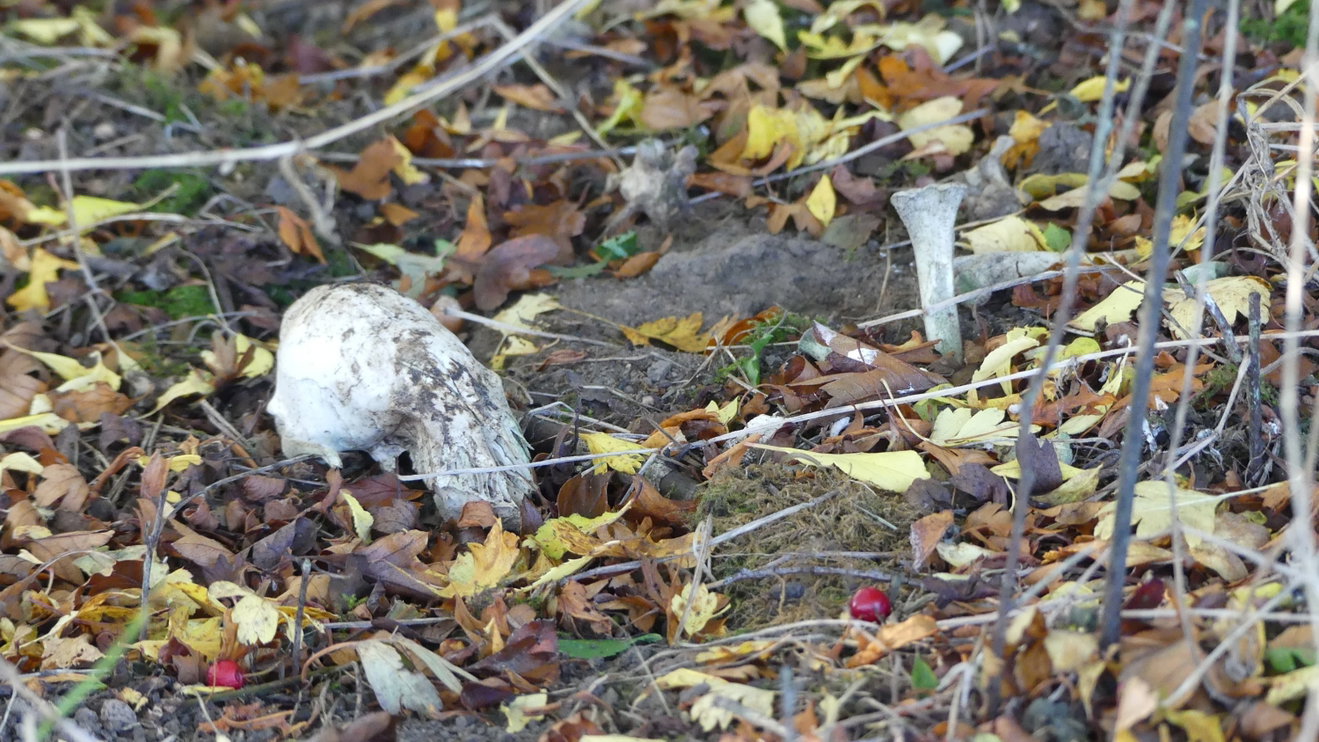
Young fox skull amid the fallen leaves.
With leaf fall gaining pace by the middle of the month it becomes possible to look into the hedge canopy and see nests now revealed and deserted. Their purpose served, and their cups filled with dying leaves, not eggs or young birds.
The one in my photo was, I'm fairly certain, made by chaffinches.
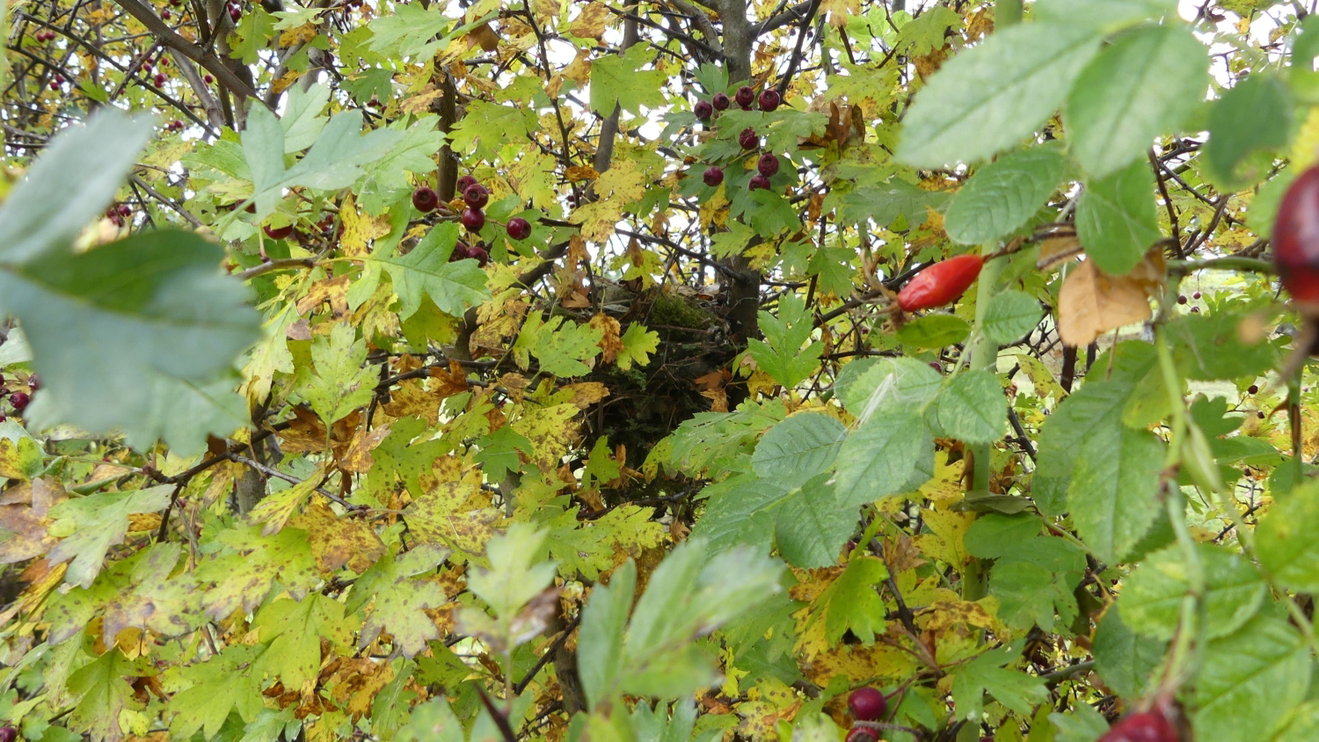
Old chaffinch's nest.
Blackbirds have begun eating the hawthorn berries, though they are extremely reluctant to be photographed, unlike the hedge sparrows, who have been flitting around and almost posing for me as I walked along the field side of the hedge.
These berries are also eaten, or at least nibbled, by much smaller creatures, possibly wasps: small mammals can be ruled out because the ends of twigs are far too slender and bendy to support their weight and the marks made by the diners are smaller than those mouse or vole teeth make.
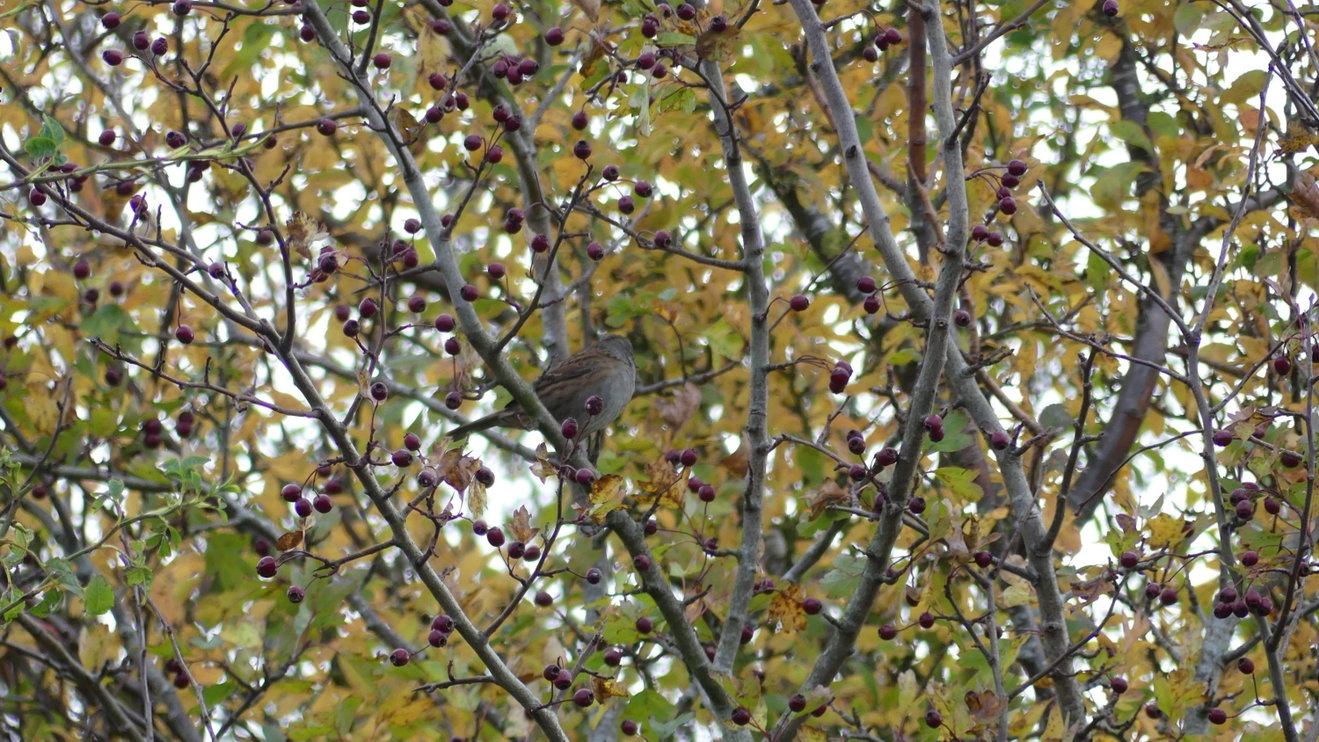
Hedge sparrow in hawthorn.
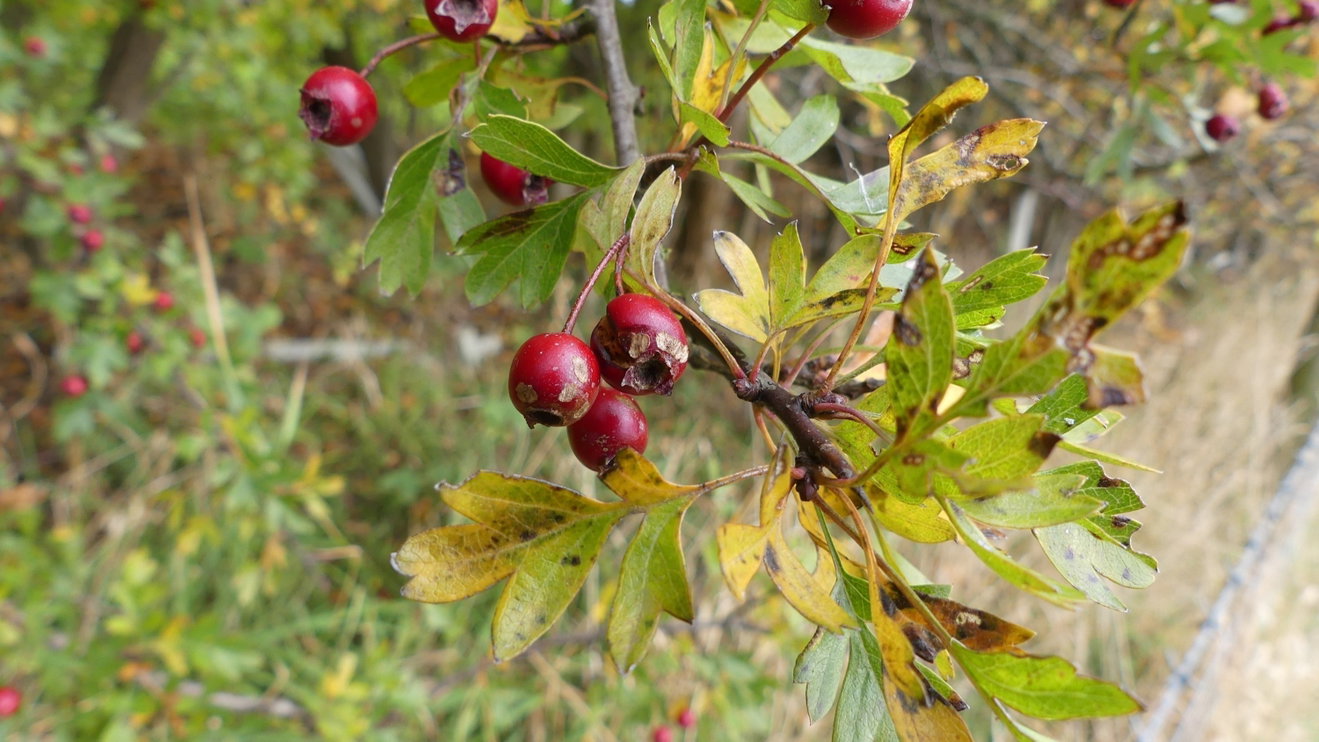
Insect nibbled hawthorn berries.
The end of the month has been rough, with Storm Beolo roaring through, and further gales following. The hedge is showing the effects of this prolonged battering: the majority of leaves on the windward side have been stripped off in many places, as have a lot of hawthorn berries which now lay in the grass and form a thin drift along the road edge. Though the blackthorns seem to have held on to all their sloes.
The high winds have rather spoiled autumn's warming palette, but the hedge is still looking very colourful, if a little threadbare in parts
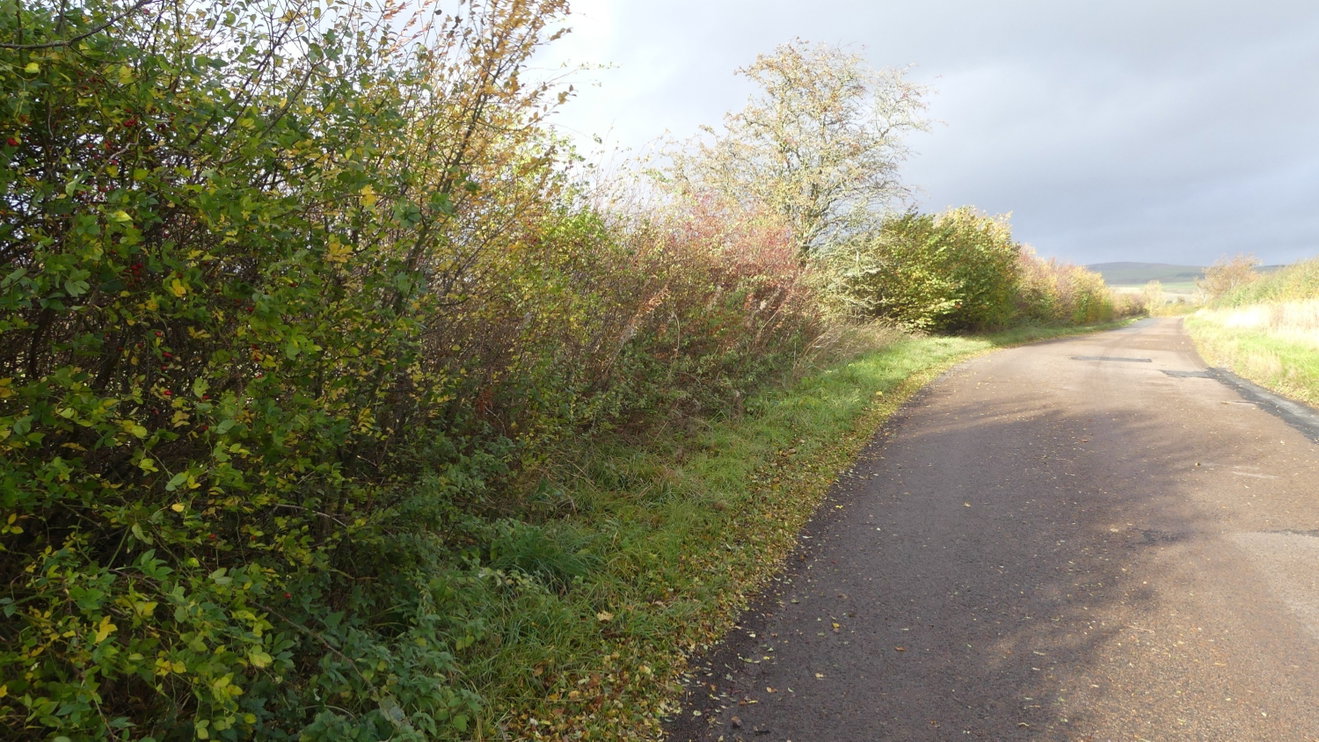
The hedge after Storm Beolo
Walking along the road in the very windy conditions reinforced what I was already well aware of: an unlaid hedge, particularly when the bushes grew up in plastic shelters (preventing the growth of low branches) provides almost no protection from wind or rain at the bottom. The gusts passing through flatten grasses and herbs along the edges which would otherwise offer some low cover.
The prevailing wind, no matter how strong, is very unlikely to blow any of the bushes over, but some sections have been 'trained' by years of pushing from the windward side and lean slightly away from it towards the road.
It is one of these bare bottomed sections I will be laying in the new year when birds have stripped the berries.
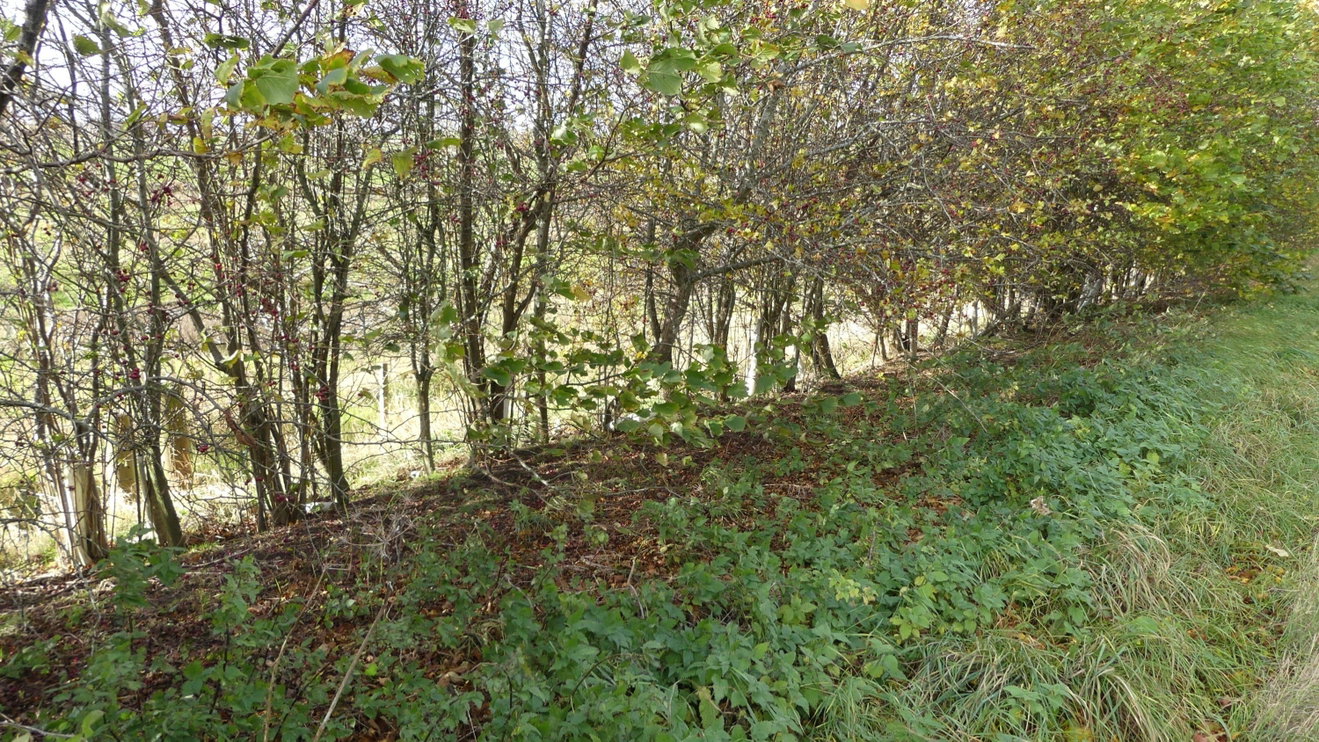
A bare bottomed section.
The westerly/south westerly gales will no doubt be holding up the influx of fieldfares and redwing, who will feast on the haws when they arrive.
I hope they are still in Scandinavia and haven't attempted to cross the North Sea or many will be lost to the waves.