
Guest Story: Michael Boxall tells us about his hedge in March
Thursday, 26 March 2026
I didn't lay any of the hedge this winter, but have trimmed back its road side face at the many points where it protruded towards the carriageway and could have been a nuisance to walkers if they have to step onto the verge when a vehicle approaches. In the long term it may be sensible to have it flailed gently - this is possible - but for now my hedge trimmers do the job, though I do have to rake up and take away all the cuttings.
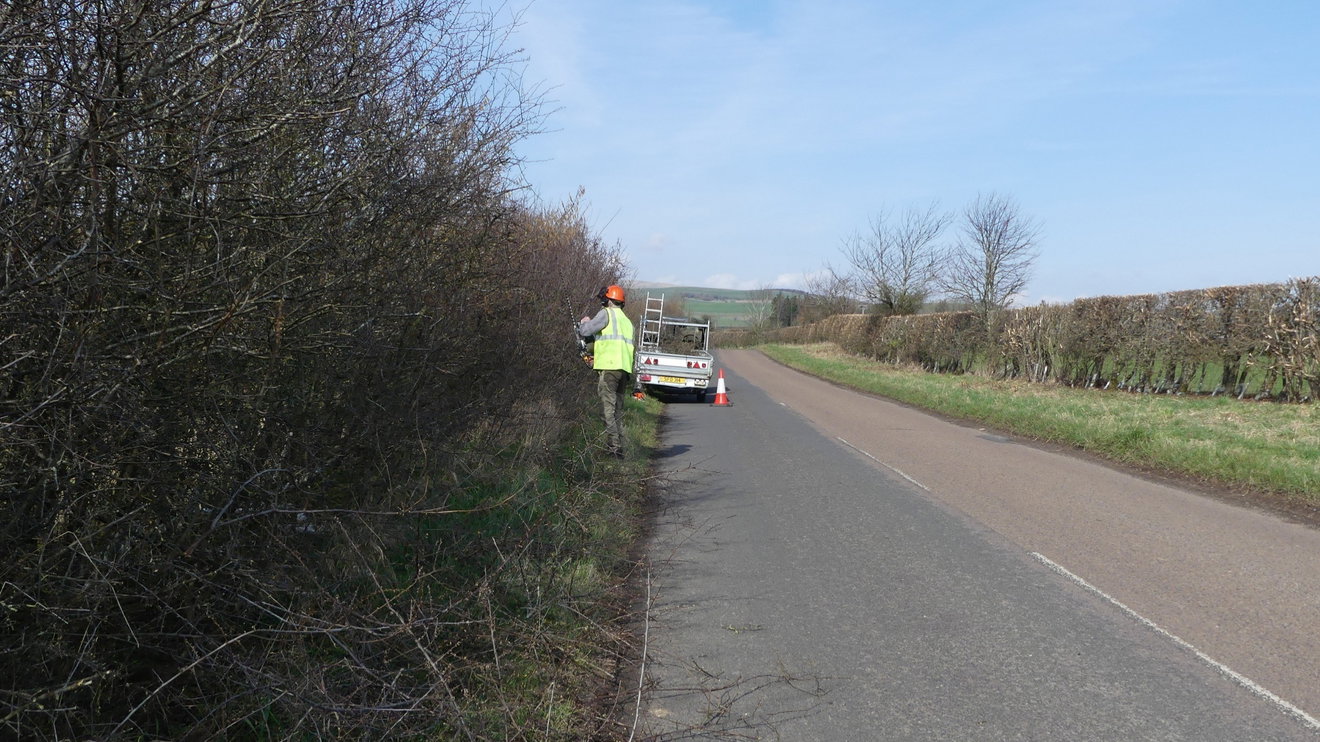
Cutting back the road side hedge
Though buds are opening rapidly, revealing the tips of pale green of new leaves and hints of the snowstorm of blackthorn and hawthorn blossom soon to come, even the widest sections can be still seen through and some of last year's nests remain visible, including rather surprisingly two pigeon nests only five feet from the ground. Their eggs then young were probably much safer in the thorny fortress than they would have been in a tree exposed to every passing crow or bird of prey, though not from stoats, who are very agile climbers and would I have little doubt be happy to dine on pigeon squab.
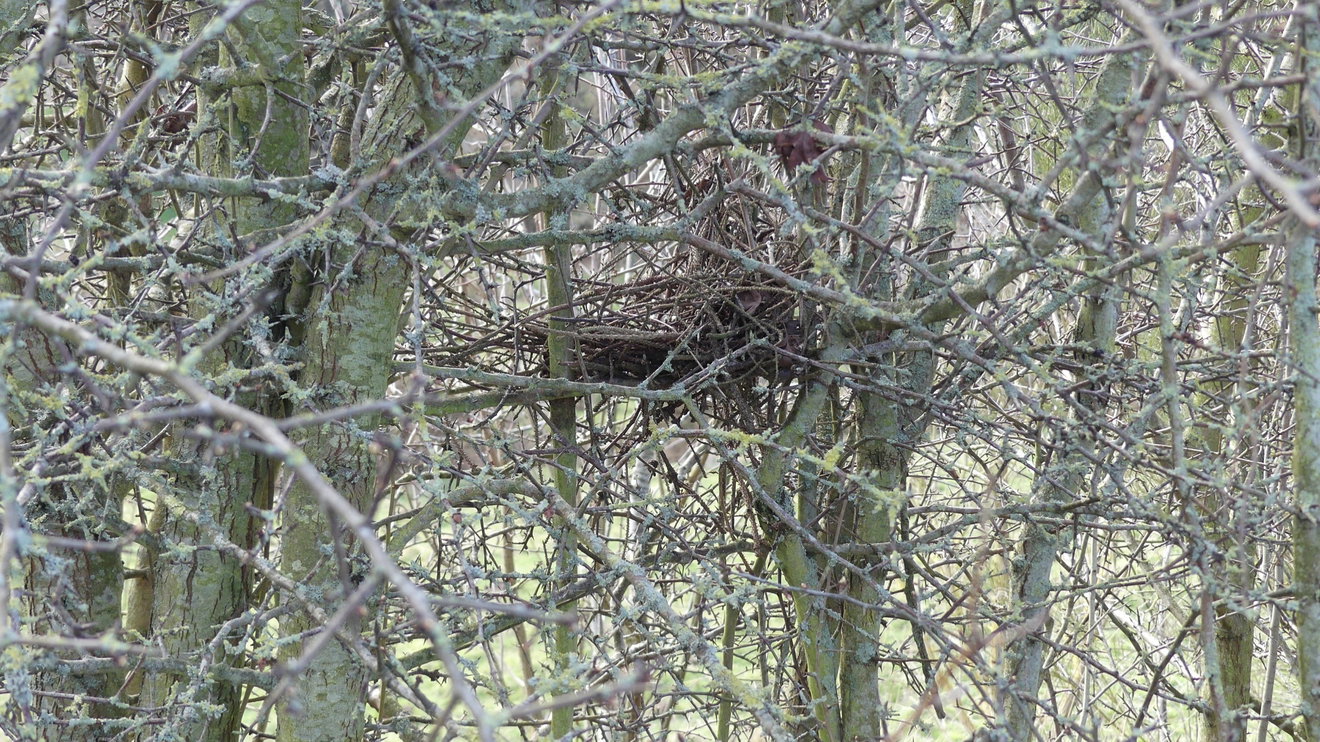
Old woodpigeon nest
Unlike hawthorns, which remain where planted, by man, or other animals, blackthorn bushes produce suckers from their underground roots, enabling them to spread: I am lucky in having the space to allow this and no desire to prevent it happening, at least on the sunny west side, though do have to cut them where they appear close to the road. At several locations they are now forming small thickets extending out from the hedge and increasing its value as habitat.
For many years scrub has been reviled and 'scrub bashing' has long been a favourite occupation of conservationists and conservation volunteers because it is perceived as an invader of other valued habitats, but it is important to wildlife in its own right and its development should be encouraged in many more places.
Though my adjacent field is grazed for part of the year, by cattle and sheep, I want it also to be as wildlife friendly as possible so don't have it chewed to the bone and am happy to let patches of blackthorn grow out into it: they add to the overall size of the hedge, helping it become more a belt of scrub and are also introducing additional diversity to the field.
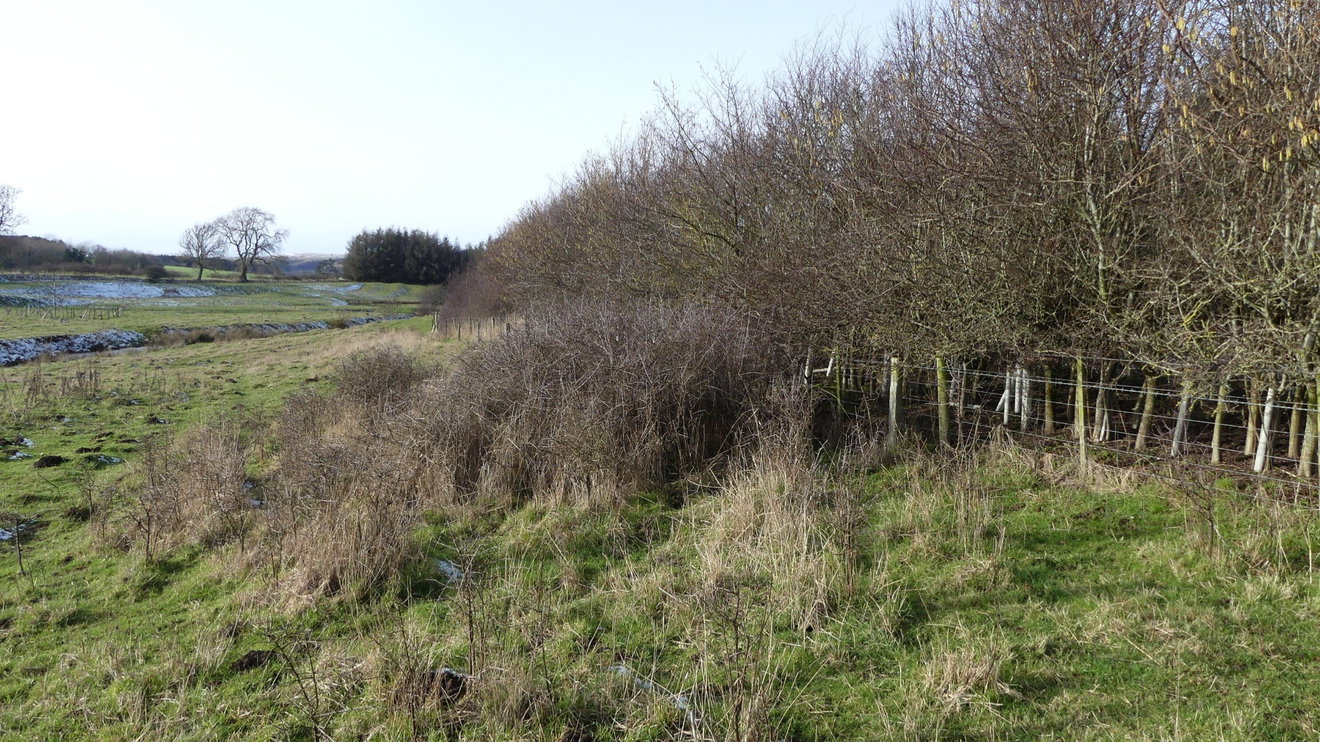
Spreading blackthorn
It isn't something the majority of us have ever considered, but a pair of insectivorous birds, in order to spend the breeding season in any place and raise one, possibly two broods of young to fledging require a huge number of caterpillars, flies or whatever small life they feed on: they may eat all or only one of these prey types, which is just one reason why a skinny hedge between intensively farmed fields holds few if any such birds: it cannot support much of the invertebrate life they require because there is insufficient food available to sustain the small creatures either: there isn't a viable food chain.
Any hedge is more valuable if it has some unmanaged vegetation alongside and preferably on both sides because 'weeds' and tall grasses provide additional food sources for invertebrates and increase the foraging area for birds and small mammals, which are themselves preyed on by owls and day flying birds of prey.
This hedge runs along the top of the roadside embankment: the sunny slope between it and the field is a small wilderness of rough vegetation, with some garden plants (which I presume didn't arrive naturally), birch and rowans I planted.
The road prevents me from letting a similar strip develop along that side, but across the carriageway is a wide, rough, fairly species-rich verge which performs the same function, and I am very pleased traffic is normally light, reducing the chance of hitting any birds flying across to forage there because those nesting in the hedge include it and the adjacent flailed hedge as part of their territories.
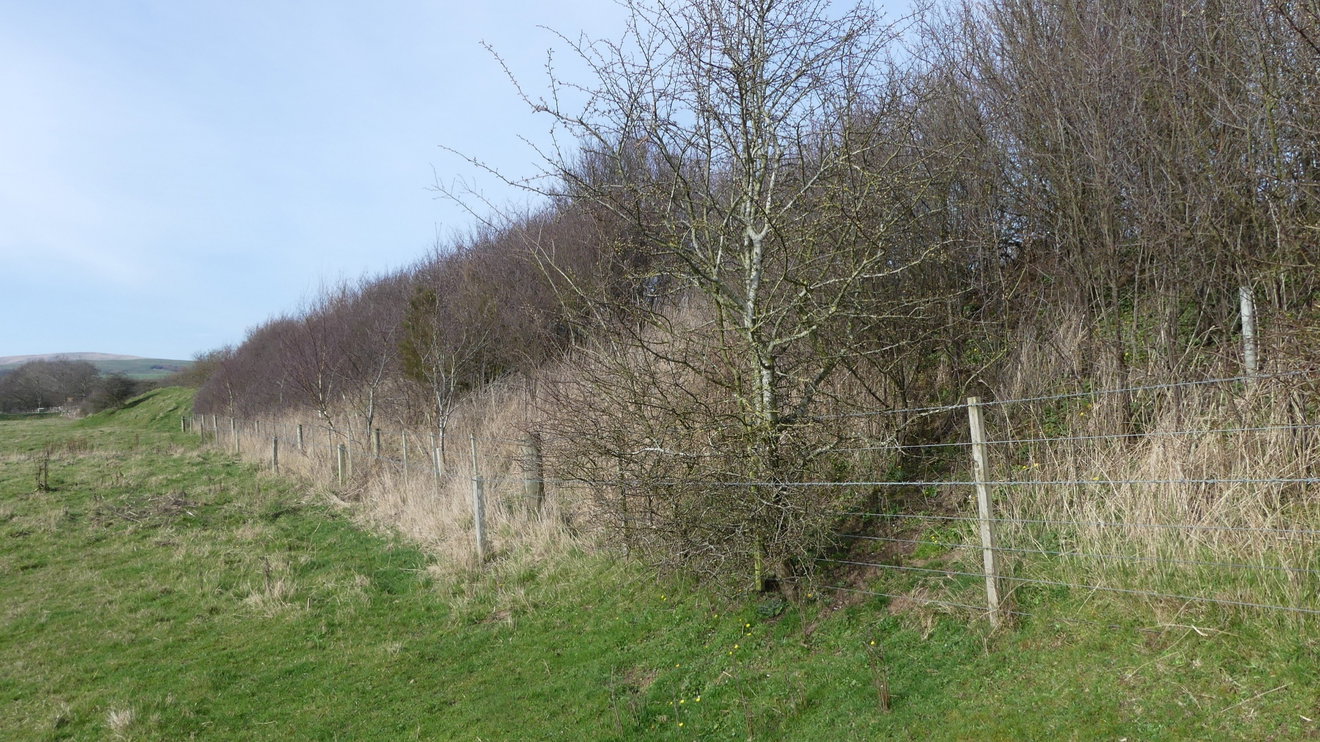
The rough embankment
Bullfinches are seed-eating birds and they also need the combination of hedge and rough, weedy ground to provide them with food throughout the year, including in spring. They enjoy the nutritious flower buds of shrubs and, as many gardeners will know to their probable annoyance, fruit trees.
I have no evidence so far of them nesting in my hedge, but they do forage along it and, in common with other seed eaters, need to feed nestlings with insects because the youngsters are unable to digest hard seeds as they are unable to grind them down and would starve if they were fed on them.
This is why it isn't a good idea to feed birds with them in your garden during the breeding season: they will take the seed back to their young.
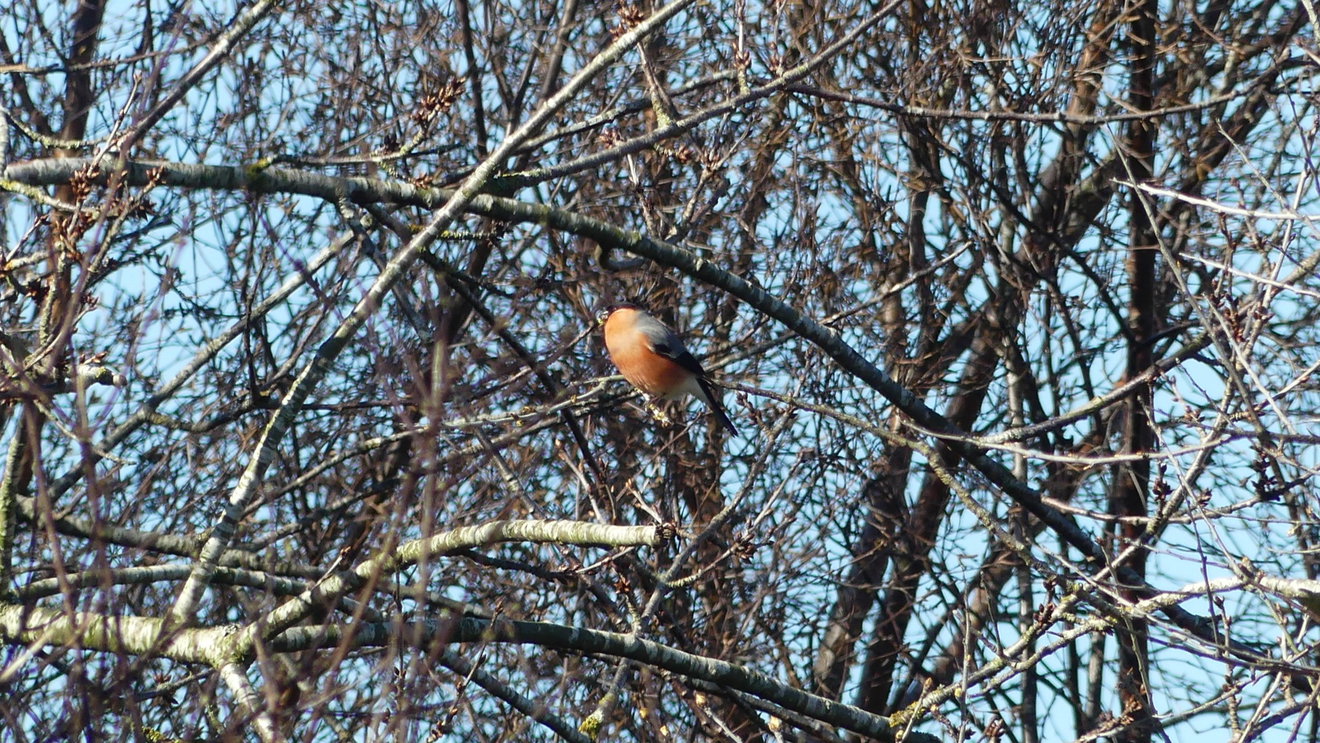
Male bullfinch
Sparrows often cross from the cottages on the opposite side of the road to spend time chattering and probably feeding in the hedge, but I was amazed to come upon a Goldcrest foraging in the grass on the field side of it one morning in December. The tiny bird appeared little bothered by my close approach, but eventually flew into the hedge and returned shortly after to the area of conifers growing on the opposite side of the road, which is the kind of habitat I would expect to find it in.
The natural world is full of surprises.
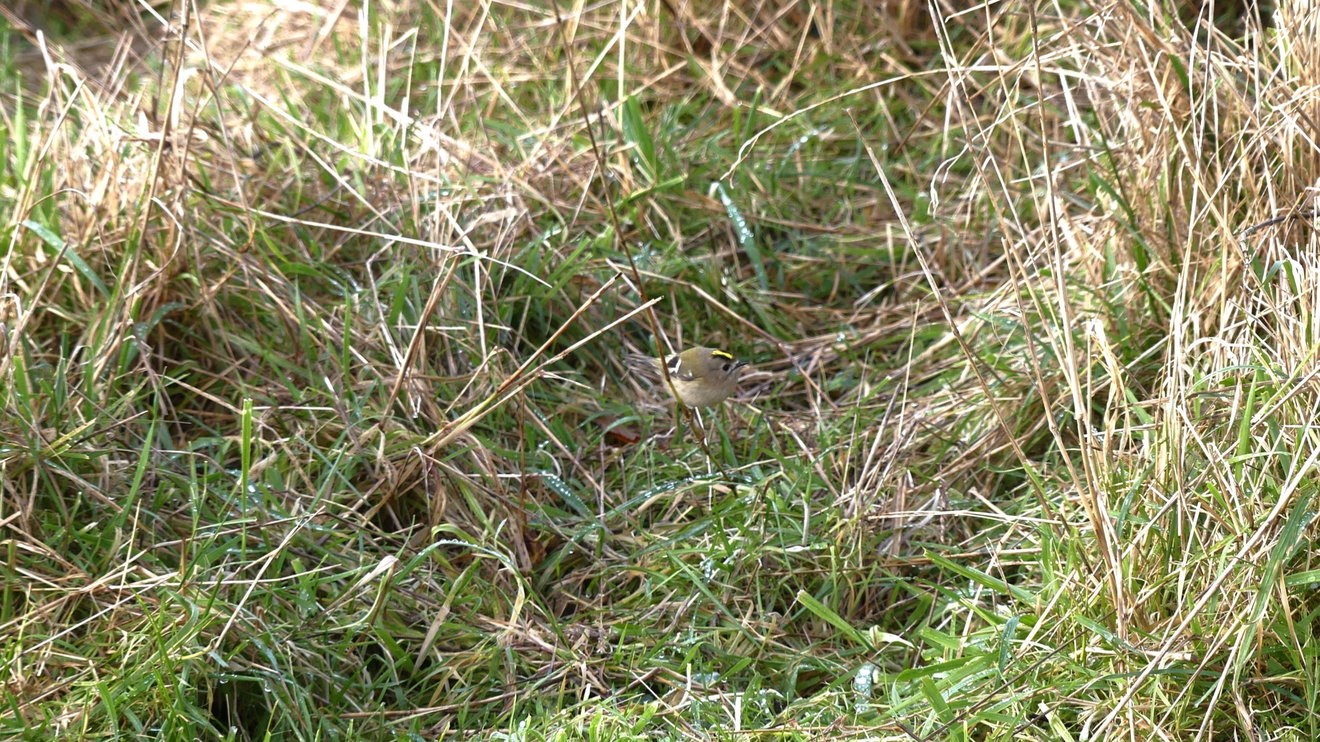
Goldcrest