
Guest Story: Michael Boxall tells us about his hedge in June
Sunday, 28 June 2026
The start of the month was not my idea of what June weather should be, but some badly needed rain has come and it is amazing how quickly the grasses and other plants alongside the hedge have responded: it is almost possible to watch them grow! Cow parsley and Hogweed are flowering and both provide food for a wide variety of insects. Common along many road verges but looked on as weeds in most gardens, where they can be invasive, here they are welcome additions to the hedgerow.
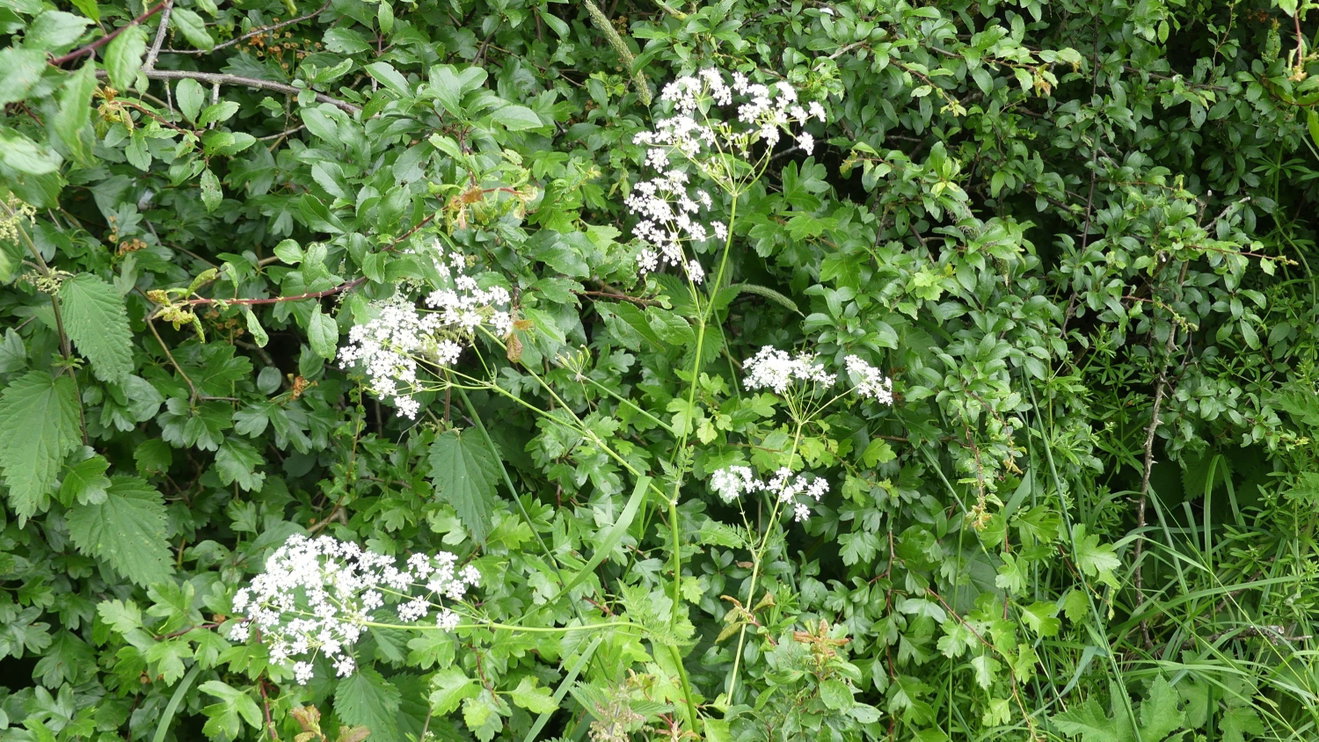
Cow Parsley
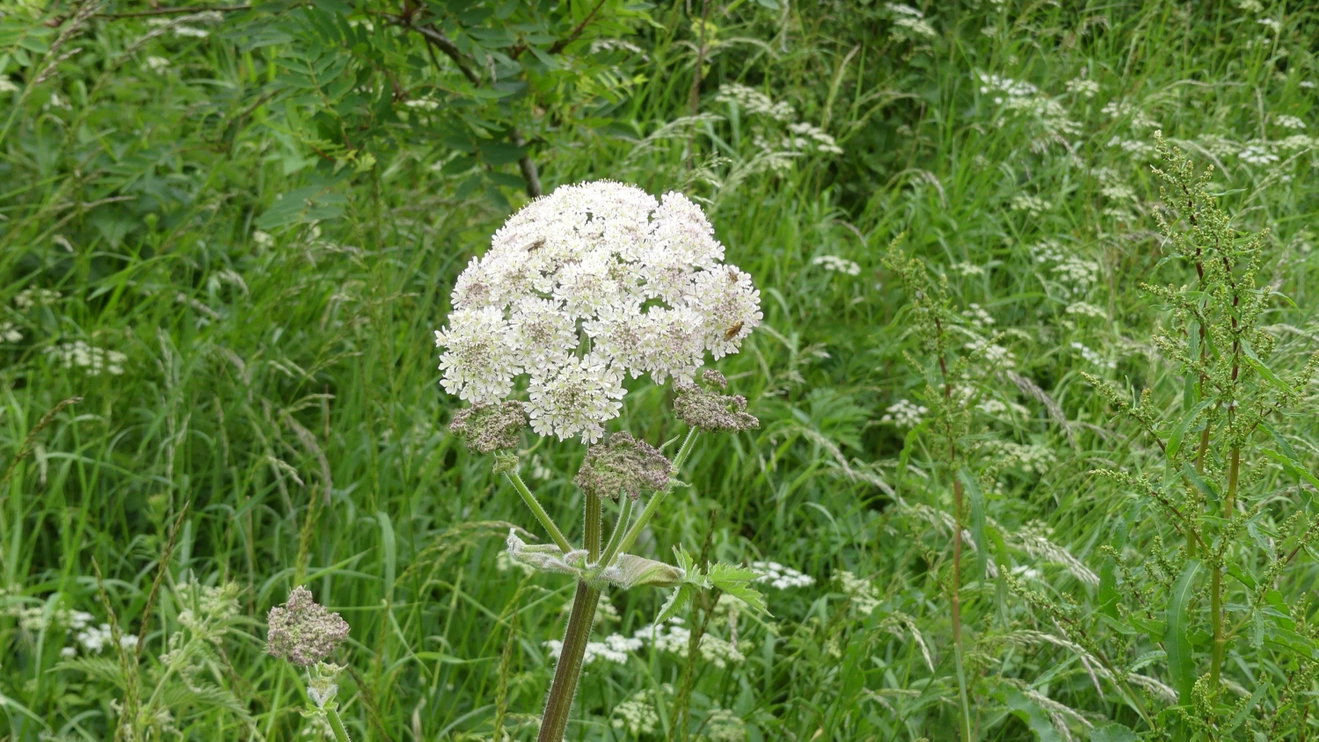
Hogweed umbel
The bushes have lost their delicate, bright spring green and are assuming the heavier, darker hues of summer, while the hawthorn blossom seems to have gone over very quickly and already haws are developing, some even showing more than a blush of the deep red they will become when ripe. Pollination looks to have been very successful, as it usually is and there should be a good crop of berries to feed our resident blackbirds, mistle thrushes and the fieldfares and redwing when they arrive in autumn. Unlike many farmers, who unfortunately continue to trim their hedges annually in autumn and therefore remove any fruit they manage to bear I won't be doing any serious cutting until all the berries have been eaten, which will not be until February or even March.
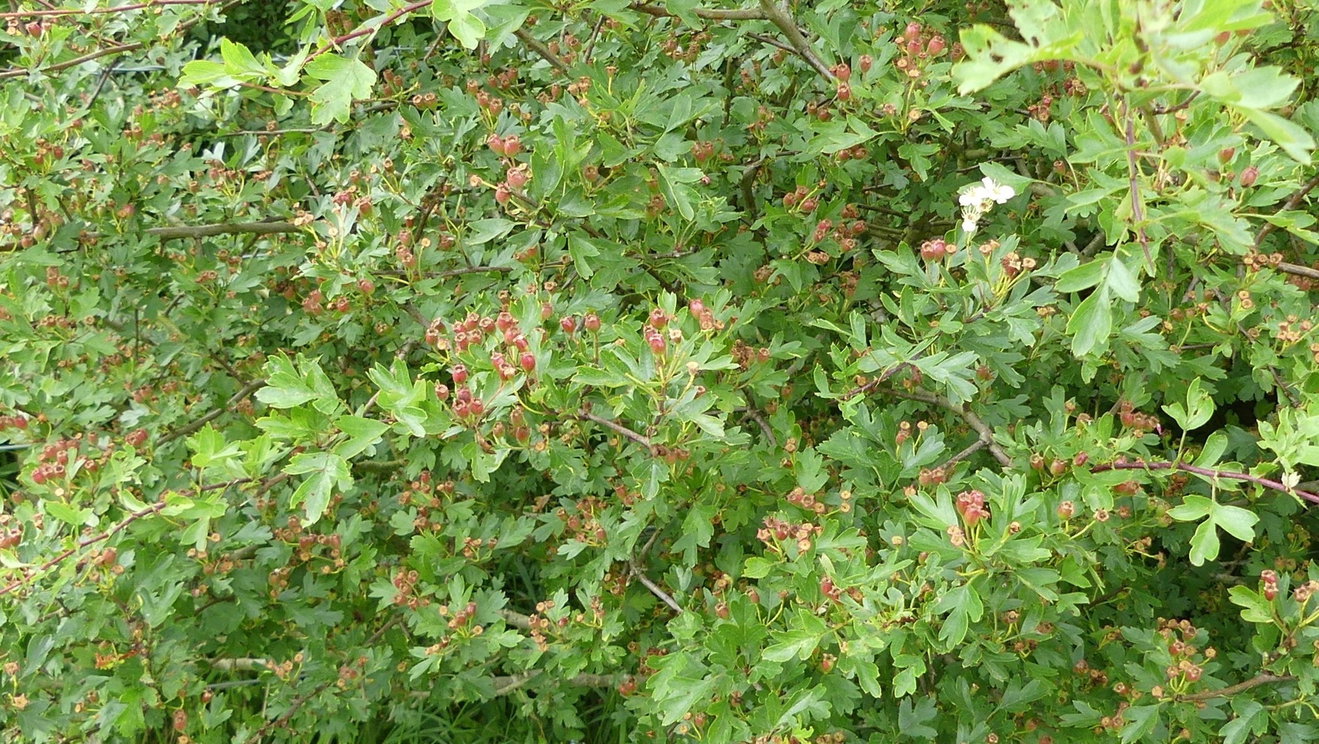
Developing haws,
The hedge, being composed of long lived shrubs doesn't have to start from scratch each year as the grasses and herbs do and its growth is far less obvious, but still noticeable: extending hazel shoots in particular are quite limp at first but straighten out as the new wood hardens. All the bushes must be pleased to have had a good drink as they prepare to face the summer onslaught of aphids, caterpillars and other small creatures who suck sap and eat leaves. Some of the hazel leaves are already full of holes, though I have no idea what small life is responsible because in spite of looking I haven't found anything actually eating them. The sap sucking aphids in the photograph are also known as whitefly for obvious reasons, which can be troublesome in gardens. Not being an aphid expert I have no idea if these are the same species and they declined to answer my question. As I haven't so far found them on hawthorn or blackthorn they may be species specific.
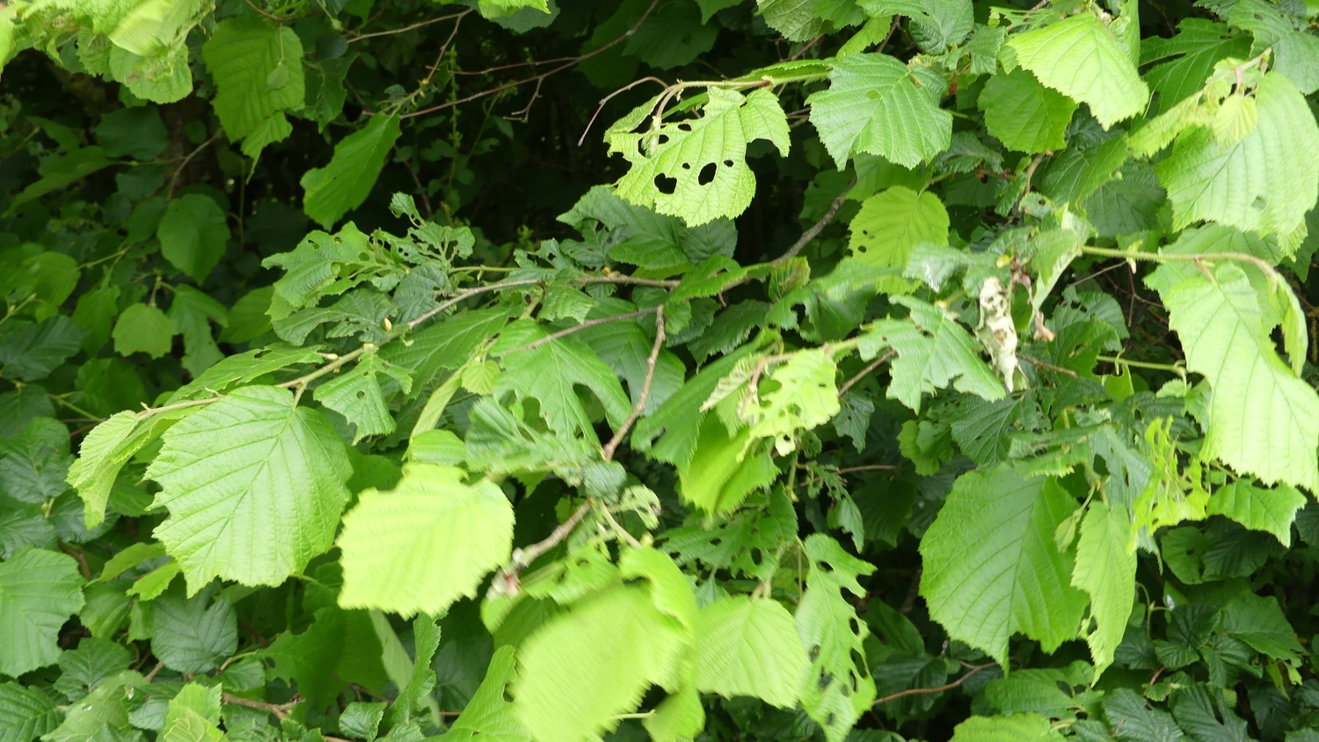
Hazel leaves eaten.
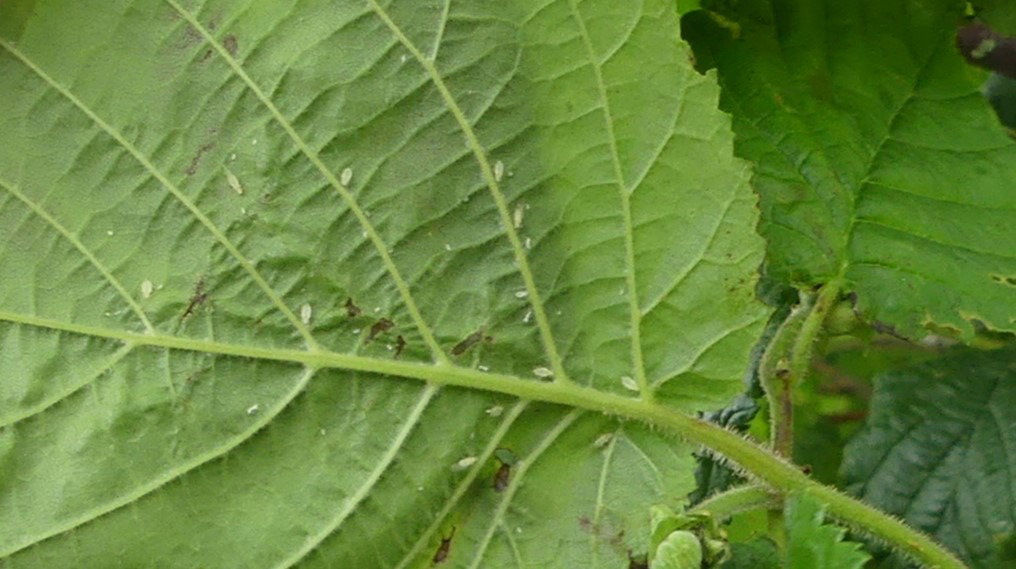
Aphids underneath a hazel leaf.
On some of the blackthorn bushes leaves have become crinkled and thickened along their margins: these are galls caused by mites. The mites lay eggs on the leaves and the resulting larvae cause the leaf to gall in which they feed well protected, emerging later in the year as adults to overwinter on the bushes in bark crevices, from where they will re-emerge in spring to lay their eggs on next year's leaves and produce a new generation; if they are not found by birds and eaten before they can do so..
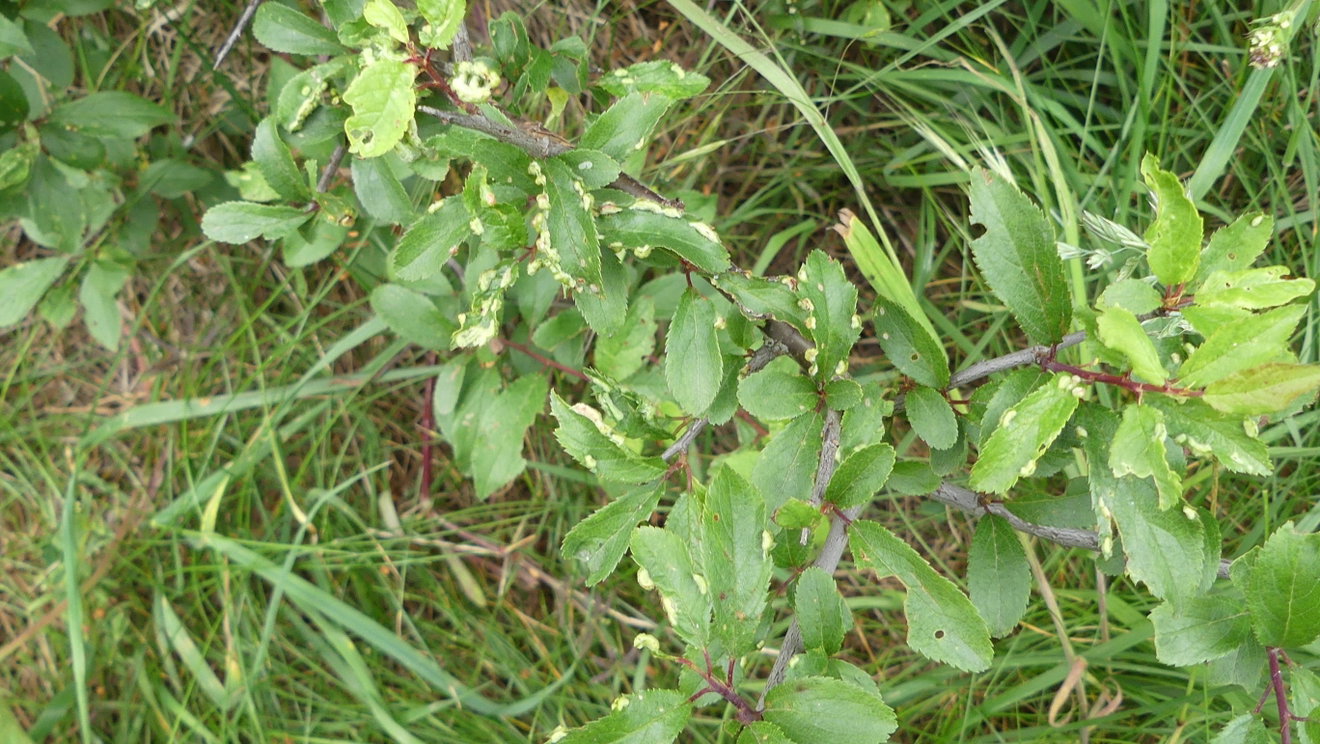
Galls on blackthorn leaves
June is the month dog roses bloom, the last shrubs in my hedge to do so and while their flowers cannot match the sheer exuberance of the two thorns, they do possess a beauty and delicacy the others lack. Roses, wild and cultivated are also subject to attack by a variety of midges - not the kind which bite us - gall wasps and sawflies; the latter are already making their presence felt by attacking the leaves. Female sawflies deposit their eggs inside the leaves and those affected curl as a result of the larvae feeding in them.
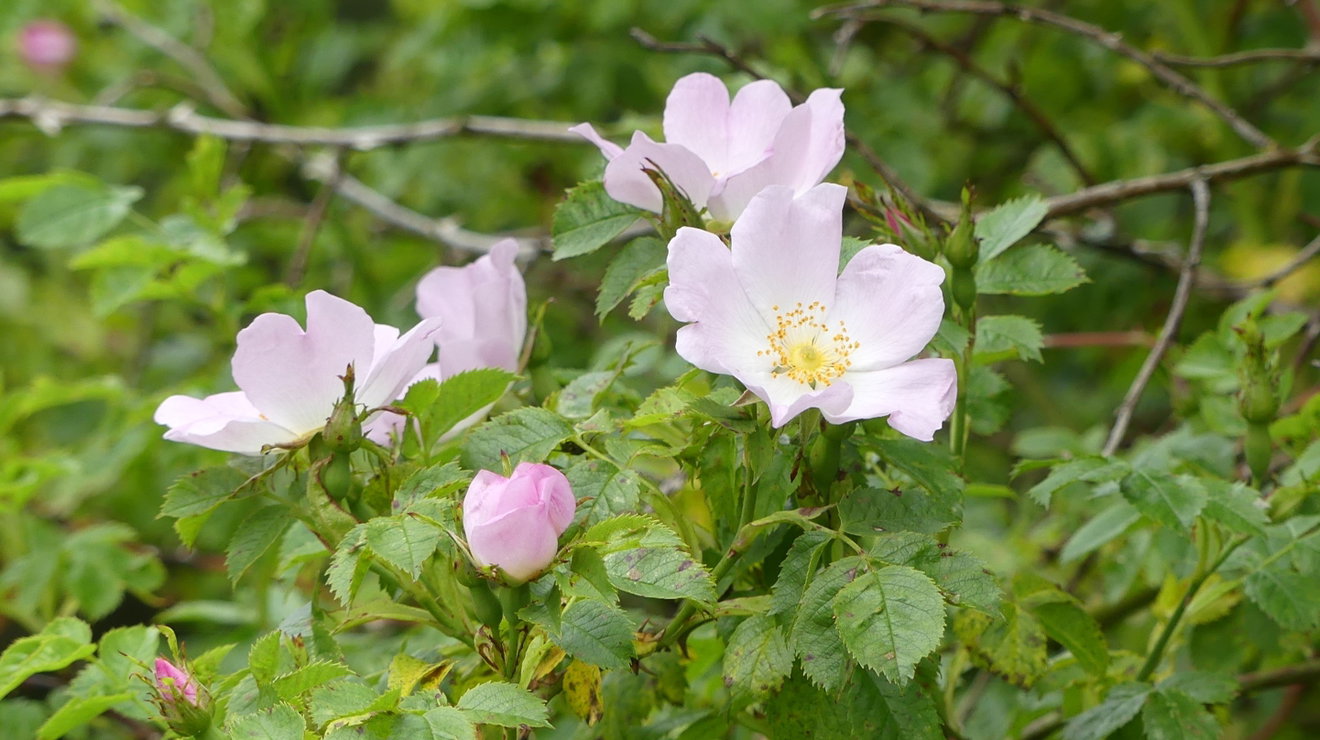
Dog rose in bloom
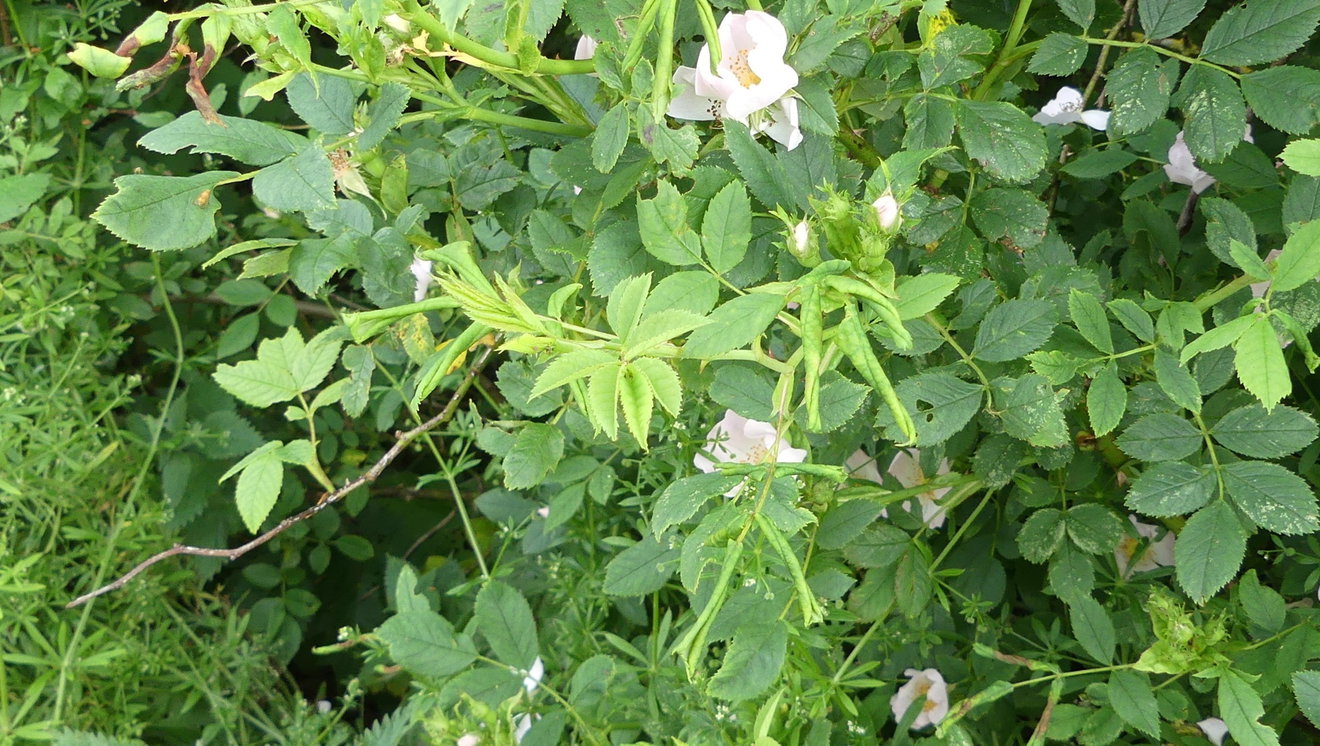
Leaf curl on dog rose
There were few butterflies to be seen along the hedge in spring, but meadow browns are appearing now: they frequent rough grassy places alongside hedges, roadsides and in fields, the females laying their eggs on grass blades, on which their larvae feed. It is a shame the roadside verge has been cut, but doing so allows walkers to step safely off the tarmac when vehicles come along and I can't argue with that.
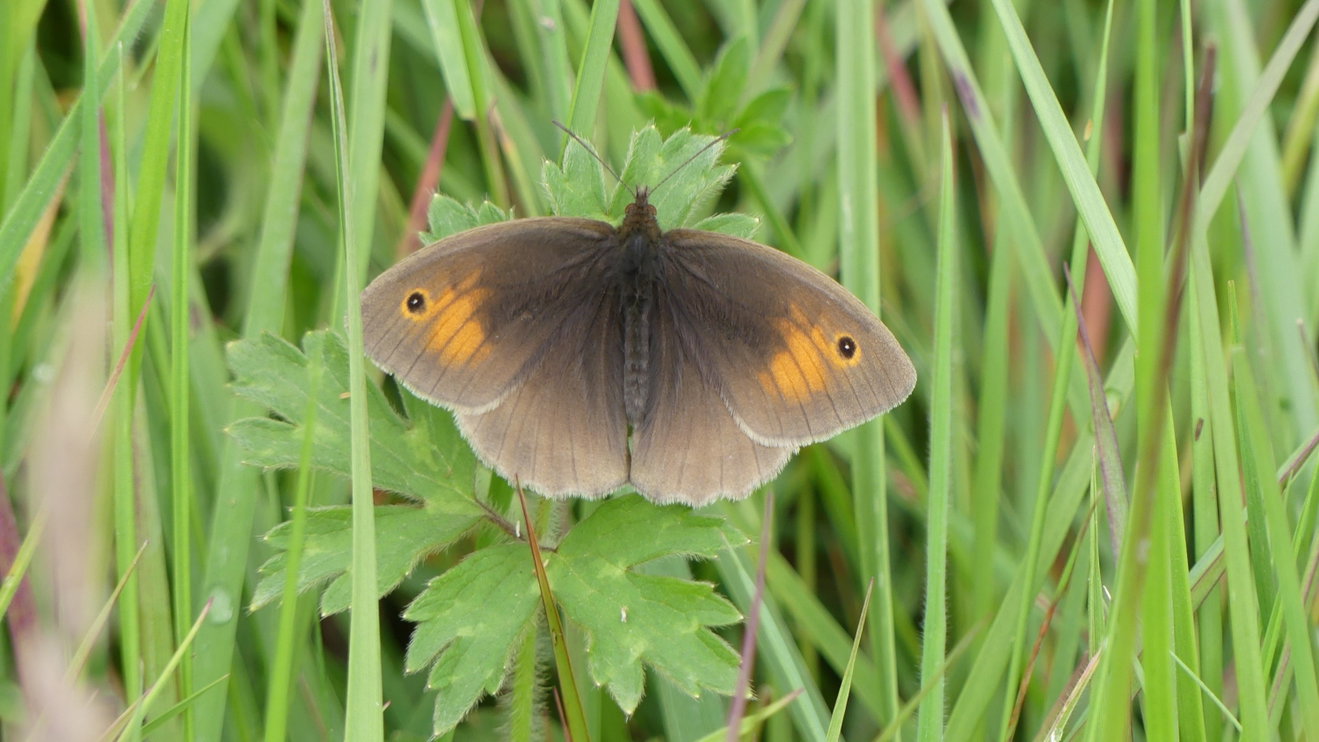
Meadow Brown
In the bird world things have become quieter: territories were established in spring and the inhabitants are now fully occupied with feeding young, though the willow warbler still sings at times and there are occasional calls from the other residents. The whitethroats haven't returned, which is very sad and may mean they are lost from the hedge as a breeding species. Young birds apparently learn very quickly the location of the place they were born, using the earth's magnetic field, position of the sun, stars and other guides we have no understanding of - their own version of GPS which is far more reliable than ours - to find their way back, in the case of summer migrants from potentially thousands of miles away to a particular building or bush and if, for whatever reason none of the family return the following year no other birds will know the location and therefore not come to it unless the overall population is very high and some are forced to seek new territory. I hope their absence has a less doom laden explanation and I will hear their familiar cheerful but slightly angry sounding song again next year. It is of course possible that a year of extra growth has in some way rendered the hedge unsuitable for them, but don't believe this is the case.
Rabbits living under the widest parts of the hedge continue doing what rabbits are renowned for and their increasing numbers have grazed a small area of adjacent field to almost billiard table shortness. This is not a problem for me and my tenant's cattle have more than enough grass to cope with, but for them, being out in this area now renders them highly visible, day and night to buzzards, foxes and anything else which enjoys a meal of rabbit meat. So far there is no evidence the colony has been affected by myxomatosis or VHD, unlike in some parts of the country, even locally where as a result they are presently scarce.
Having begun the month with rain it looks very much as if it will end on a dry note: no serious precipitation is forecast for at least a week and there are already signs of parching in places. While many of us enjoy hot, dry weather and ice creams it can present wildlife with serious problems we have little understanding of and from which there is no escape: I hope the hedge and its inhabitants aren't affected too badly.