
Guest Story: Michael Boxall tells us about his hedge in July
Wednesday, 22 July 2026
Joining the meadow browns, which I showed you last month are Ringlets, also butterflies of long grasses. However, with the verge having been cut neither species are likely to lay eggs on the shorn, rather browned grasses here. But they do fly along the hedge and commute frequently across the lane to and from the rough verge on the opposite side.
Though they can be mistaken for each other at a distance, they are actually quite different: Ringlets are an overall dark chocolate colour and do not have any orange brown on their wings, while their circular spots, quite distinct from the meadow brown's eye spot, and from which they get their common name, are an unmistakeable identification feature.
See their obvious difference by comparing photos 1 and 4
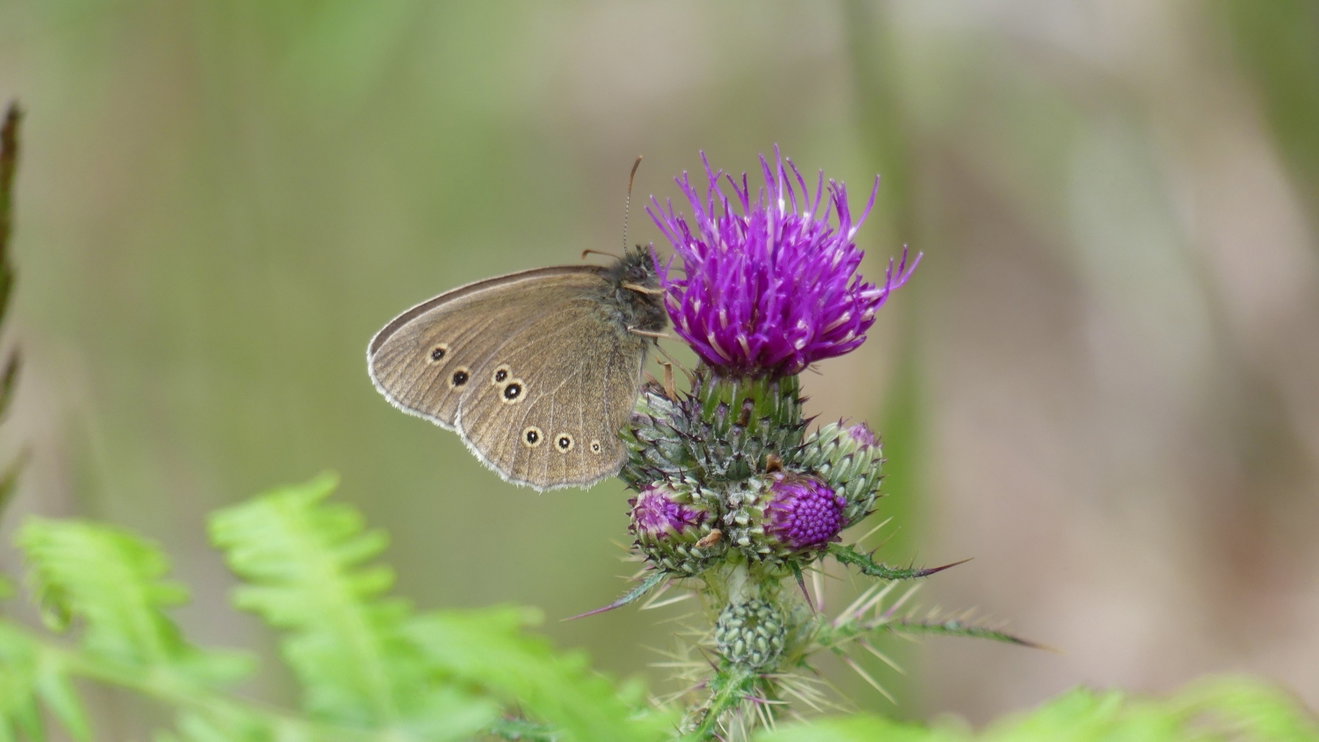
Ringlet on a marsh thistle
Against the hedge bottom, where the cutter didn't reach, the herbs have attained maximum growth: creeping thistle, spear thistle and rosebay willowherb are all flowering.
The thistles, in particular, are providing a rich source of nectar for a wide range of insects, including butterflies.
Hogweed is flowering well, and its white umbels are proving attractive to a variety of flies and beetles.
On some plants, the flowers are over, and their flat seeds are developing.
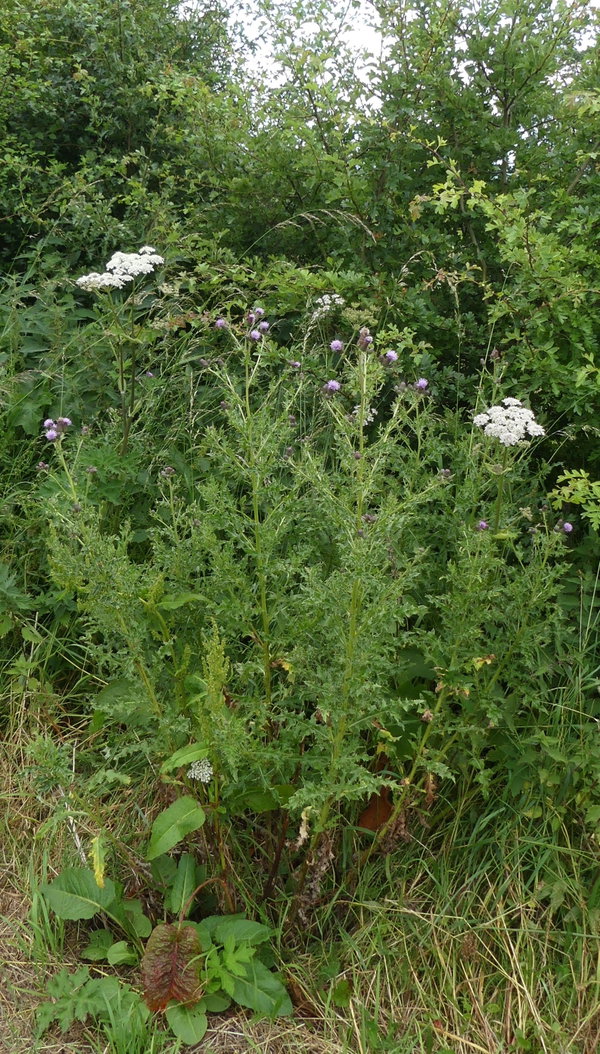
Creeping thistle
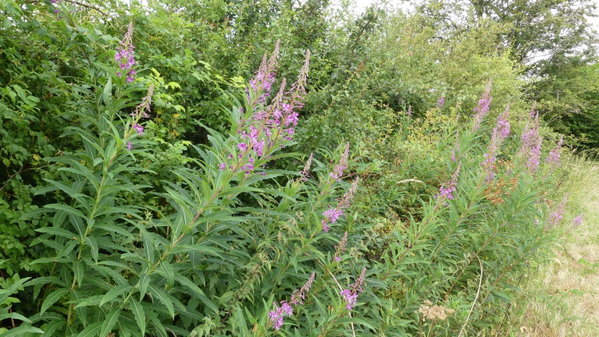
Rosebay Willowherb
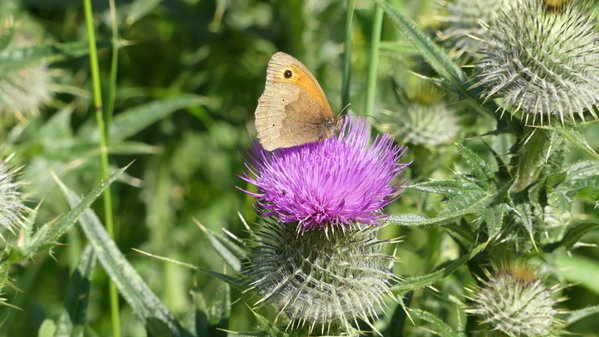
A Meadow Brown, nectaring on Spear thistle
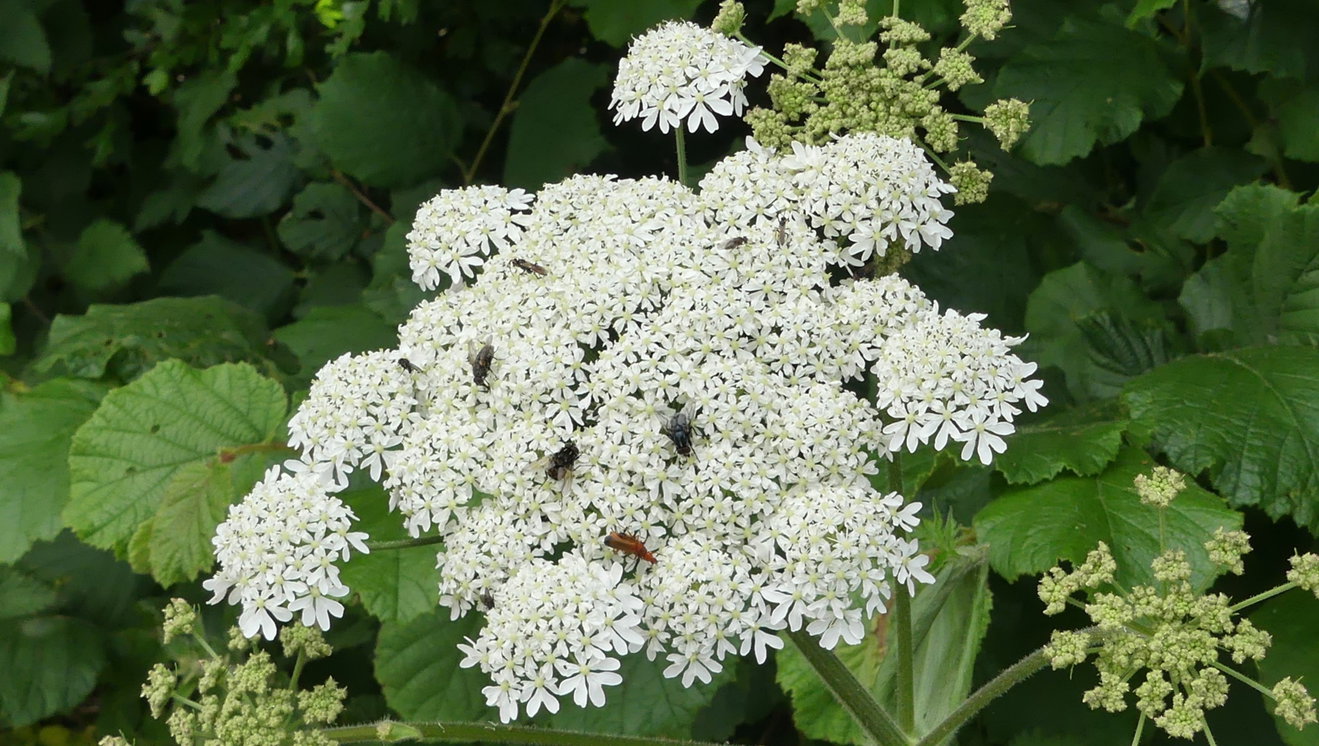
Flies and a beetle feeding on hogweed flowers
There are other plants along the hedge which provide no nectar, stinging nettles for example. These are, nonetheless, important insect food plants. The larvae of Red admiral, Small tortoiseshell and Peacock, are all nettle leaf eaters, (though I haven't so far found any) and the seeds are also eaten by birds.
Goose-grass, also called cleavers and sticky willy, is potentially another: it is a scrambler, using the hedge and other plants for support.
The delicate, yellow flowered Ladies Bedstraw is in the same family and is one of the food plants of Hummingbird hawkmoth larvae.
Moth collectors and breeders, at least in the past, successfully fed larvae on goose-grass, though as it is covered with tiny hooked hairs it may not be a first choice in the wild.
My wife and I see several of these beautiful moths each year at this time in our garden, where I took the photo. They get their common name from their incredibly rapid flight and habit of hovering at flowers as their tiny bird namesakes do to sip nectar through an amazingly long proboscis.
It is well worth keeping your eyes open in the evenings if you walk the lane on either side of the road and in your own gardens if you grow nectar producing flowers: so swiftly do they fly they can appear and disappear in an instant.
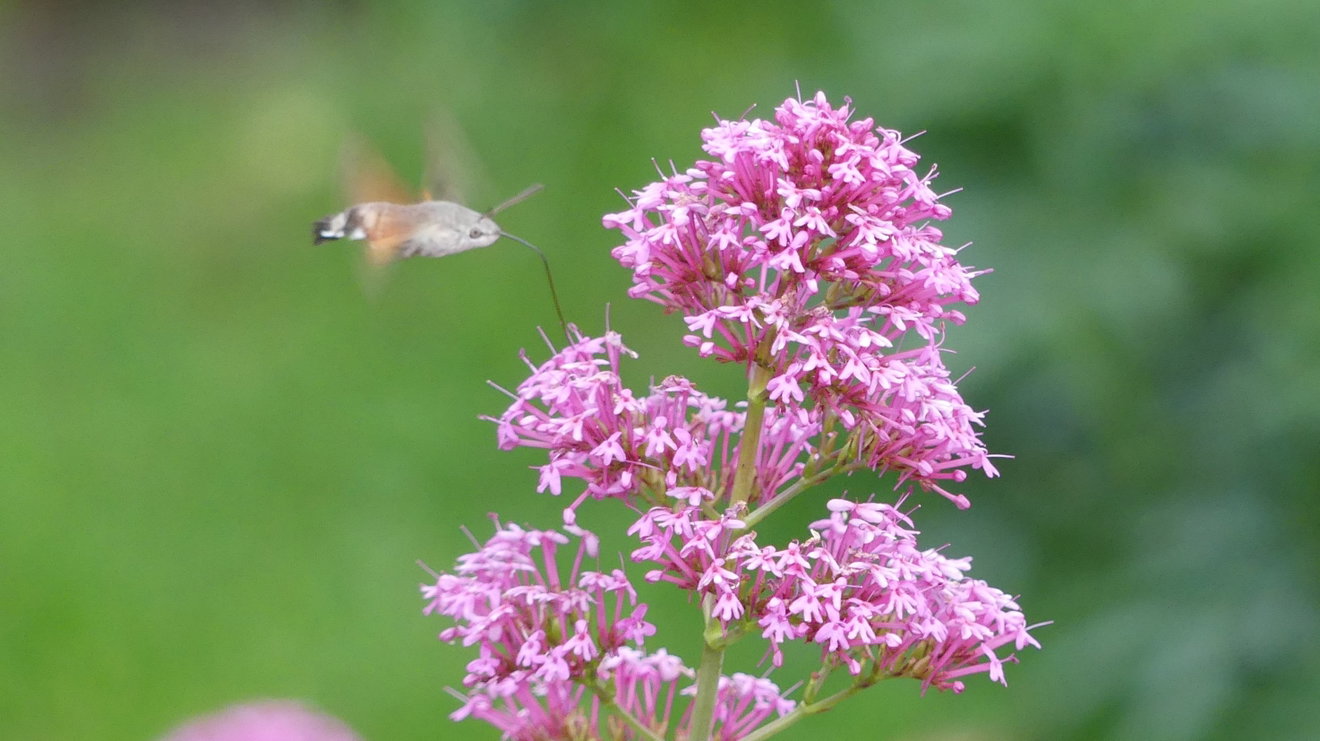
A Hummingbird hawkmoth nectaring at Viper's bugloss
A far more common moth, which is active during the day as well as at night at this time of year, is the Silver Y.
There are plenty of them about, and when settled, the white 'Y' marking on their wings, from which they have earned their English name, is clearly visible: I have seen a number of them along the hedge.
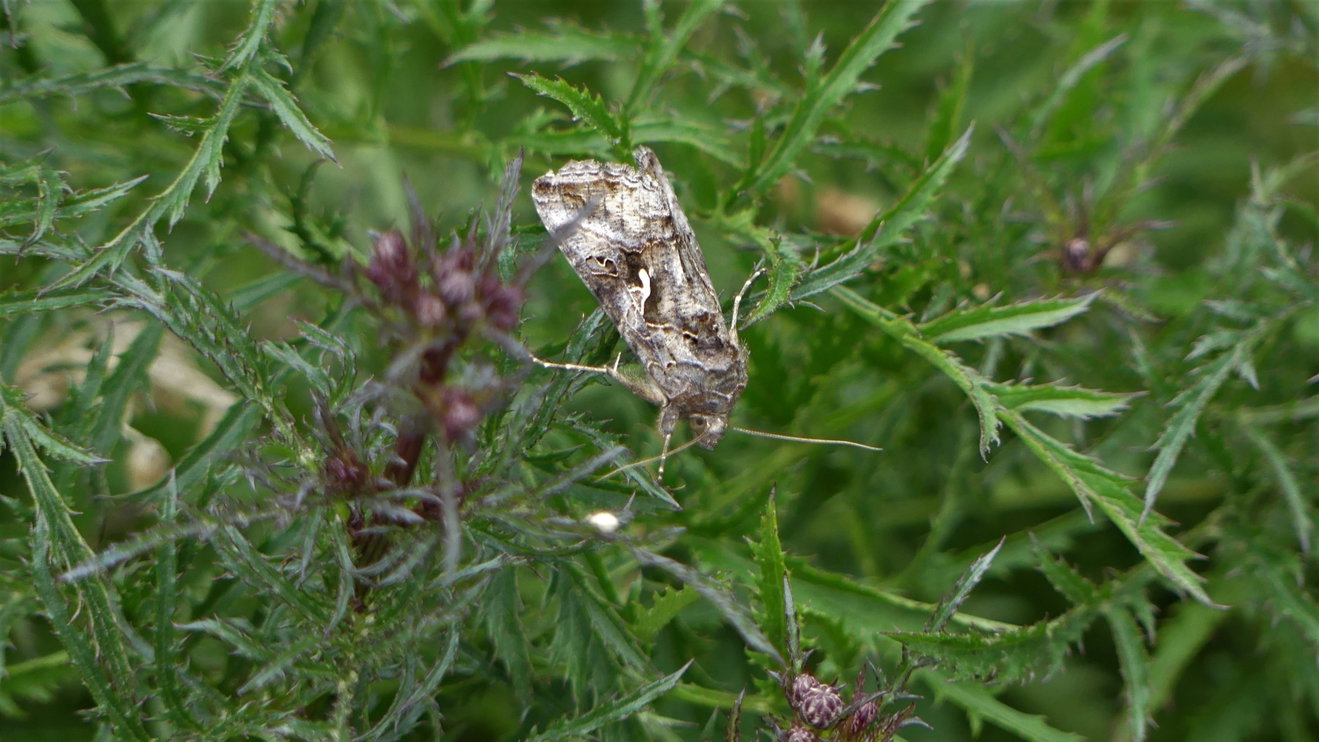
A Silver Y moth
The hedge has acquired the heavy, darker green hues of summer rolling on, but hasn't otherwise changed a great deal from last month. Dog rose flowers have mostly gone over, and hips are beginning to form. Hazelnuts are developing, and if there is sufficient rain to swell them, there will be a very heavy crop this year for harvesting by small mammals and no doubt large, two-legged 'squirrels'!
Some of their parent bushes have additional holes in their leaves - indeed one or two have been reduced almost to skeletons of veins - but I still haven't seen anything actually eating them.
There are sloes on the blackthorn, small bluish green balls at present, and if the dry weather continues for long, they will probably remain small and hard with little flesh when they ripen in autumn, which will not be good news for those creatures which eat them, or sloe gin makers.
I found some mildew on a hawthorn; a sign the bush is under stress, which could be competition for light, but far more likely due to a lack of water.
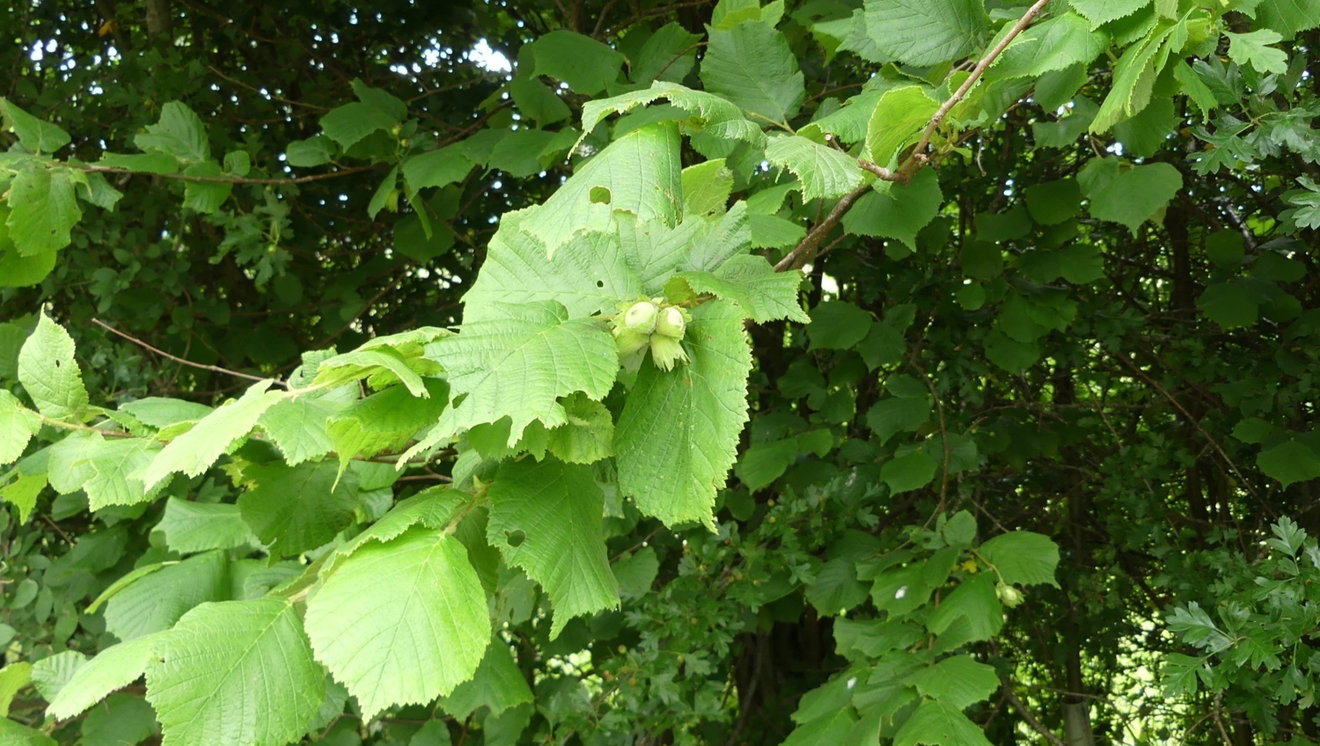
Developing hazelnuts
There is little birdsong coming from the hedge now, but there are still residents and a variety of visitors.
The other afternoon I was serenaded by a Hedge Sparrow, also known as a Dunnock: they are not related to real sparrows, but are the only British member of the Accentor family.
As their name implies, they do live in hedges and scrub, and tend to skulk about. They do also feed on the ground in the open, but remain close to cover and at times can be almost confiding. The one in the photo was gleaning morsels along the lane edge, but I did have to use a telephoto to 'snap' it.
Like robins, the sexes are virtually identical, so I have no idea whether it was a male or female. They eat both seeds and insects, which must give them a significant advantage over species whose diets are solely one or the other when some foods become hard to find.
A male yellowhammer also sang a few notes, asking for 'a little bit of bread' but failed to mention cheese.
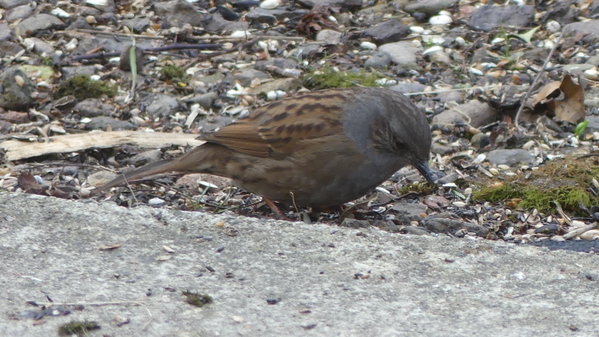
Hedge sparrow
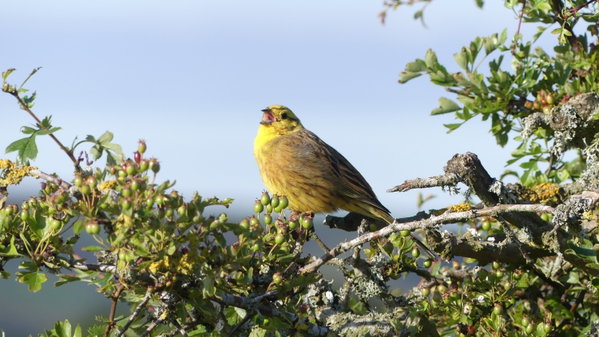
A male Yellowhammer