
Guest Story: Michael Boxall tells us about his hedge in August
Saturday, 29 August 2026
At the end of last month a redstart and two whitethroats appeared in the hedge, unfortunately, though I was able to see them briefly through binoculars, none remained in view long enough to let me photograph them.
They almost certainly came from somewhere else as the former don't nest in hedges and the whitethroats hadn't been present during the breeding season, so I believe they were merely stopping off to feed as they begin their migration: an indication that summer is rolling on all too swiftly.
It is good to know they were able to find insect food and refuel in the hedge to help them on their way.
The first days of the month brought a change in the weather, some very welcome rain and generally lower temperatures. The cool and quite cloudy conditions greatly reduced insect activity, though bumblebees were unaffected because they possess the ability to generate their own warmth, which is why hibernated queens can wake up and start appearing in February.
In very hot weather, however, this ability can be detrimental, even fatal: if the air temperature exceeds 30 degrees it is possible they may actually cook themselves! This has caused their numbers to fall down south where the heat-waves have hit hardest.
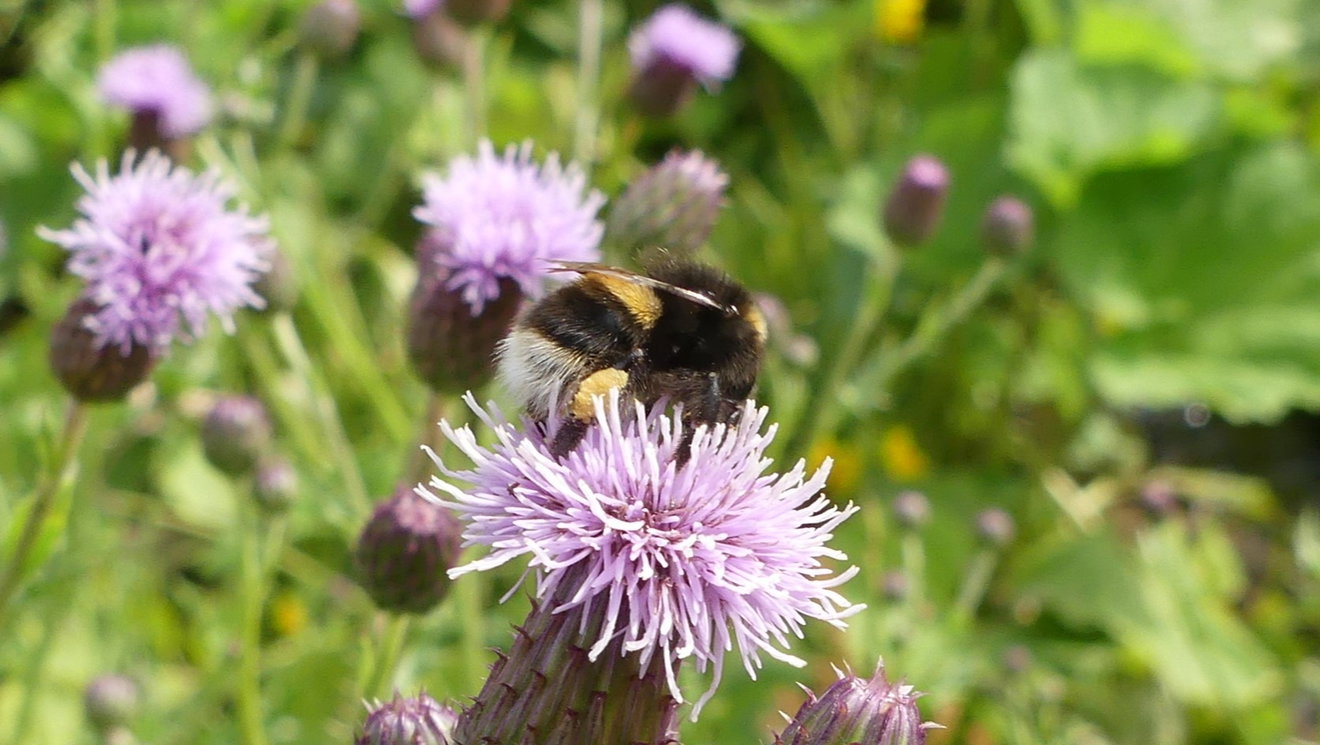
Bumble bee with loaded pollen baskets.
The hedge at a glance has changed very little over the past few weeks, though there are still things happening.
Some hawthorn leaves have been attacked by gall-causing mites: these tiny creatures, which roll the edges of leaves in much the same way as those which attack blackthorn, don't have a common name, only their scientific one - Phyllocoptes goniothorax - and have a similar lifestyle.
Rose hips are developing rapidly, as are hazelnuts, though the latter have a way to go before they reach the stage we would normally gather them to eat. However squirrels, and possibly small rodents, are happy to take them while the shells are still green.
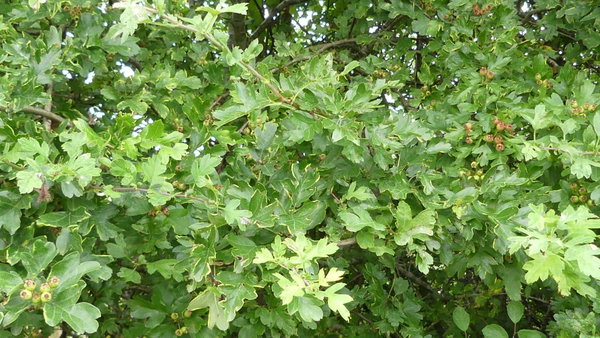
Galled hawthorn leaves.
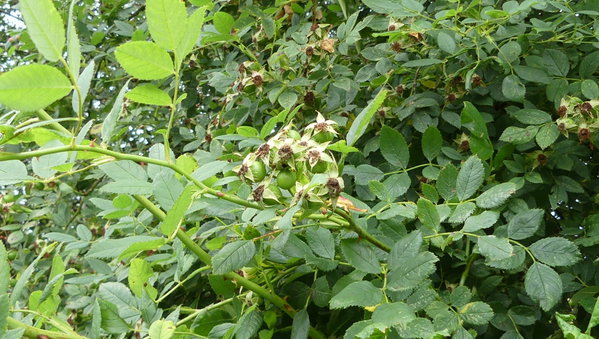
Swelling rosehips.
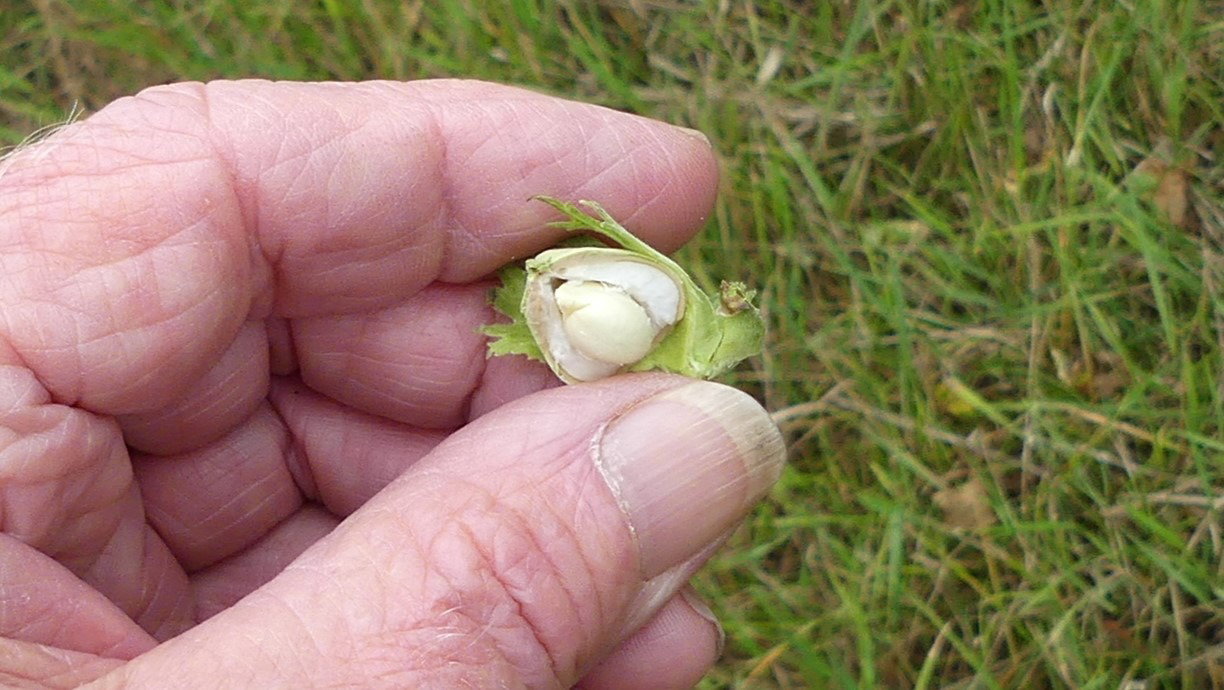
Swelling hazelnut.
One of the charms of our British weather has always been its constantly changing nature, but global warming is making the changes ever more unpredictable and extreme. From cool and at times wet conditions the hedge has, almost overnight, another heatwave to contend with. Thankfully, so far the blistering temperatures and lack of rain have had no visible impact, but if the bushes could speak I'm sure they would vent their feelings on our 'management' of the planet in no uncertain terms.
At least butterflies seem to be enjoying the heat: several red admirals were flying about the other afternoon, sparring in the air and settling to sunbathe on hawthorn leaves. Painted ladies have been particularly numerous this year but proved difficult to photograph along the hedge as they seemed reluctant to settle for me: the one in the photo was sunbathing nearby at the edge of the burn.
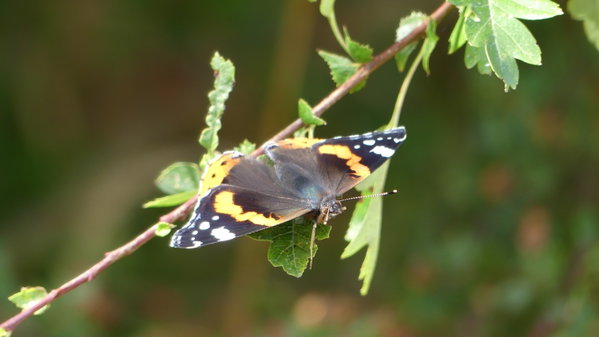
Red admiral sunbathing.
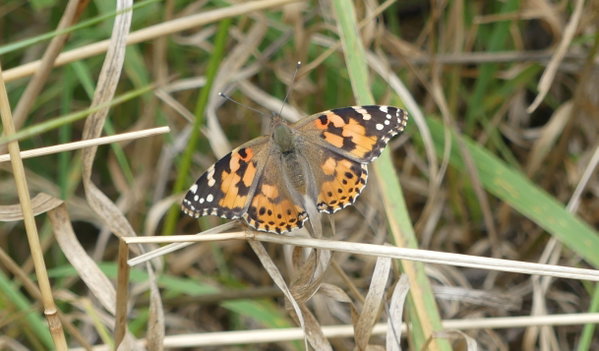
Painted lady sunbathing.
There were, as usual, a number of small birds in the hedge this morning, including a couple of yellowhammers, but they wisely remained hidden as a female sparrowhawk zipped along the lane-side then shot over the top to continue down the opposite side in the hope a potential meal would panic and fly out. An almost certainly fatal mistake to make, but the hawk was out of luck on this occasion: they held their nerve.
Unlike the grey backed males, females have brown backs, and in common with other birds of prey, are somewhat larger, but both sexes can take birds as large as pigeons.
I once came upon one with a collared dove it had caught moments before and was eating its victim's chest while it was still alive. I suppose they are frequently unable to kill birds as large as themselves outright, but to them filling their stomach is more important than ensuring their meal is humanely dispatched before they begin eating.
Nature is frequently what we would call cruel.
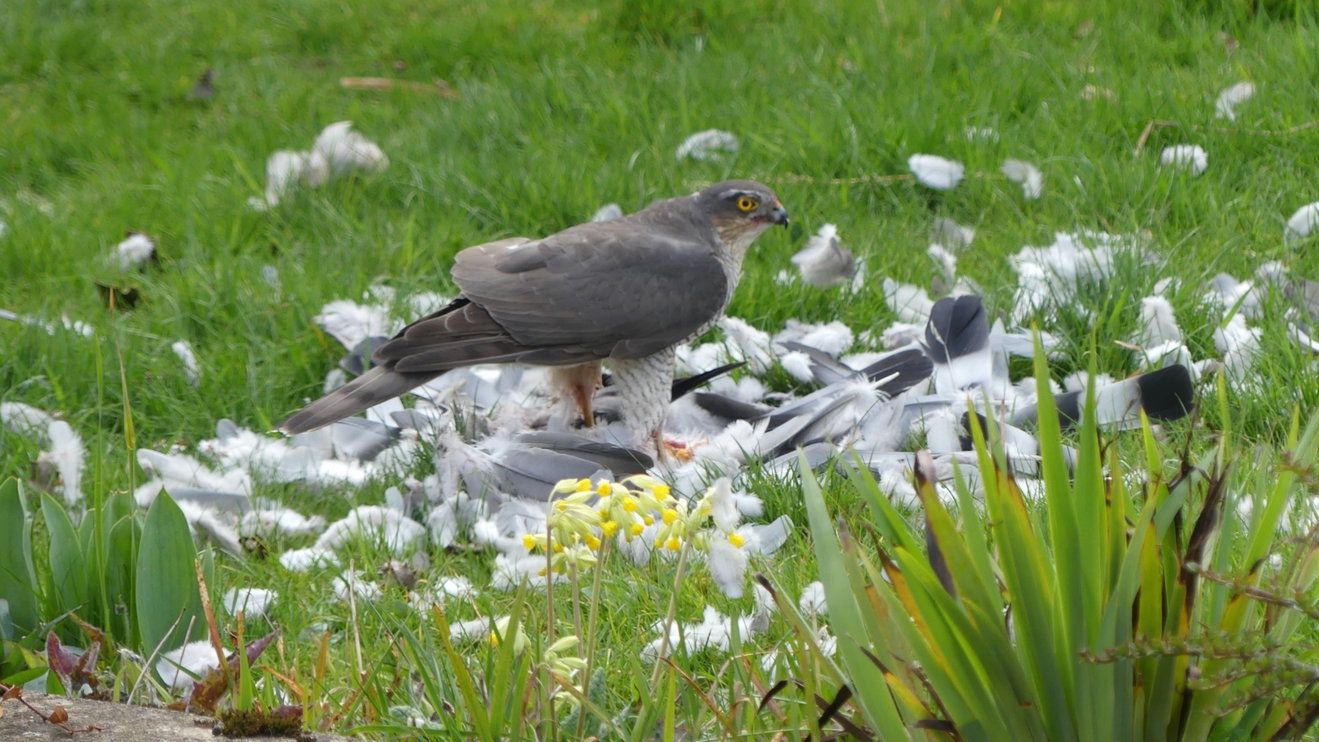
A male sparrowhawk with pigeon kill.
The end of the month is now only a few days away and there are signs summer is handing its baton to rapidly approaching autumn, the change of season speeded no doubt by the recent hot dry weather which has forced many plants to begin closing down earlier than they would in a 'normal' summer.
Some hazel leaves are already yellowing, and rosebay willowherb is going to seed.
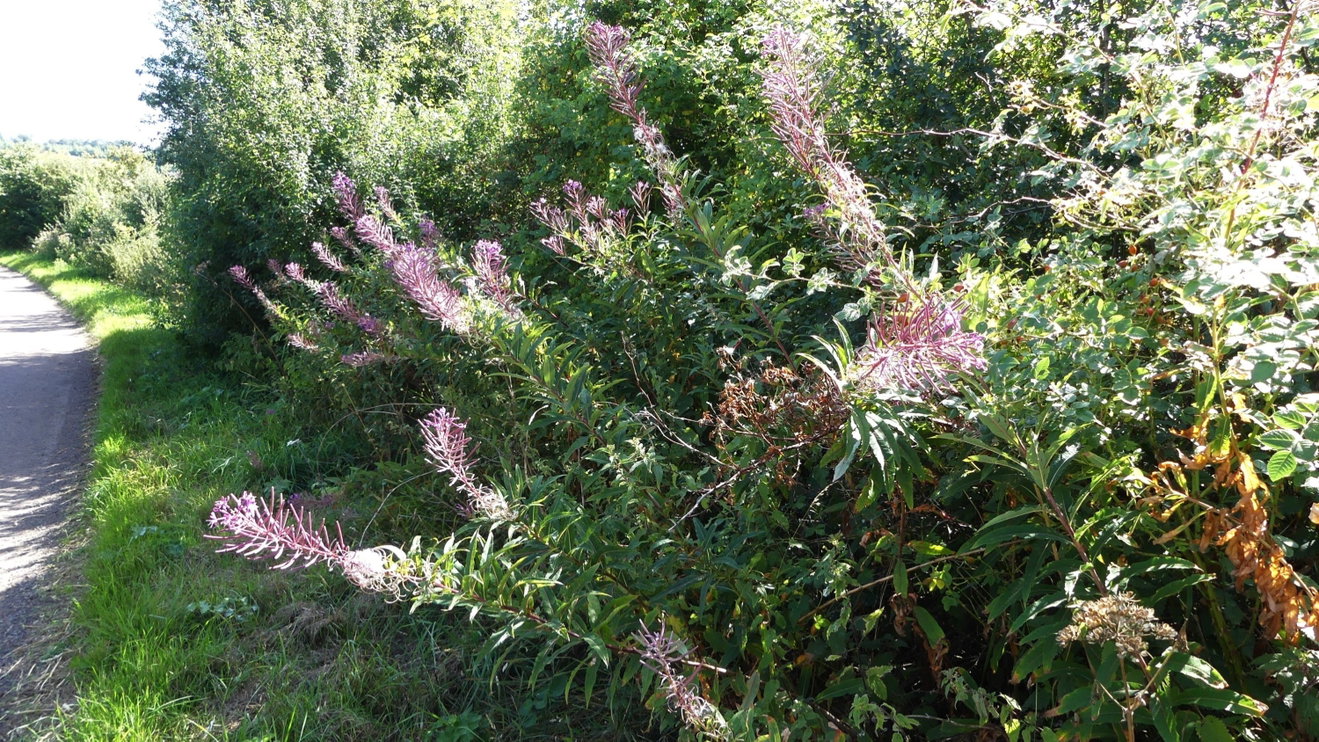
Rosebay willowherb going to seed.
For most birds the breeding season is more or less over, but wood pigeon breed most of the year these days. Beneath the hedge I found an eggshell. Some birds carry hatched shells away from their nest before dropping them to prevent predators discovering it, but where the shell lay, well under the hedge suggests it had either fallen from a nest I couldn't see or had been left there by a predator which had climbed the bush to reach it. The most likely animals to do this being stoats or rats: I know there are one or two of the latter living in old rabbit holes beneath the hedge and they are also adept climbers.
At least one pair of willow warblers nested in the hedge, or to be more accurate, under or close to it. They build a domed nest on the ground with a side entrance, very well camouflaged and I have yet to find one here - out of the breeding season of course because disturbing occupied nests is rightly illegal - but my wife did find an old one this afternoon in our garden! It was tucked down in a small flower border and she lifted its now decaying roof to reveal one unhatched egg. I include a photo of it to illustrate how well it blends into the surrounding vegetation, which is why they are so difficult to find.
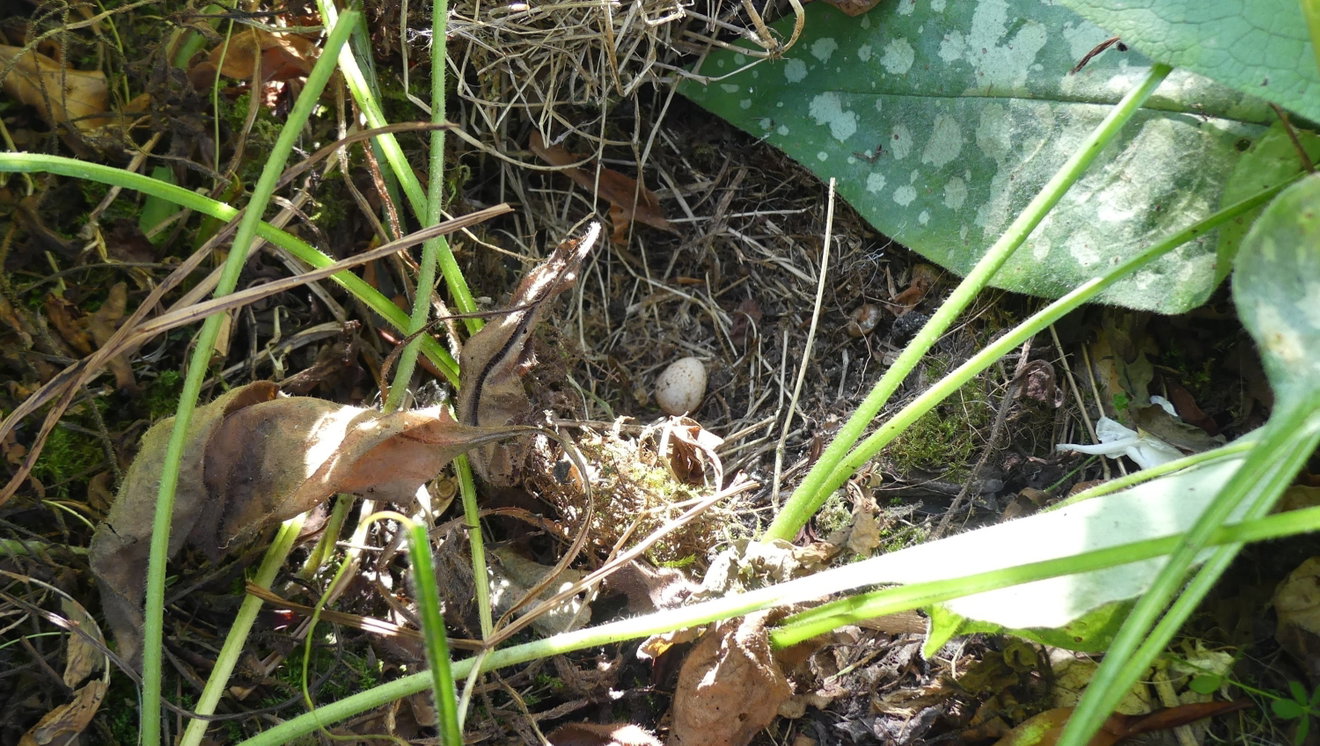
A willow warbler's nest.