
Guest Story: Michael Boxall tells us about his hedge in April
Wednesday, 29 April 2026
An illusion of winter has returned to the hedge as the blackthorn becomes covered with drifts of snow white blossom. Happily, unlike real snow drifts, unsullied by dirty salt spray thrown up by passing vehicles.
There are at this time of year few sources of nectar and pollen in the countryside, and bumblebees are making the most of this one. The flowers possess no fragrance our noses are able to detect, but rather than scent it could be they appear different in ultra violet light, which some insects can see, effectively hanging out a welcome sign invisible to us but advertising what is on offer to those requiring them.
Visiting insects obtain vital sustenance, and, unintentionally pollinate the flowers in the process, ensuring there will be fruit in autumn; the purpose of which is to ensure as far as possible survival of the species should the old bushes succumb for any reason - not so we humans can make sloe gin!
It is thought blackthorn may be one of the ancestors of our domestic plums.
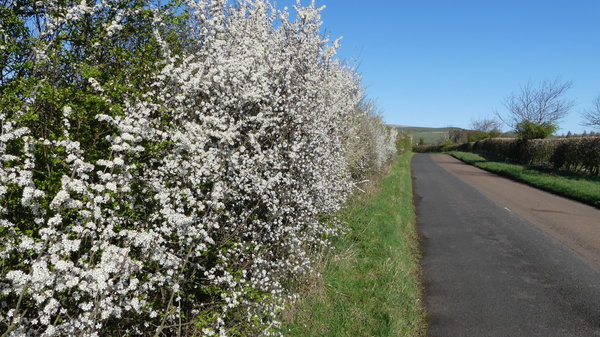
Blackthorn flowering along the roadside.
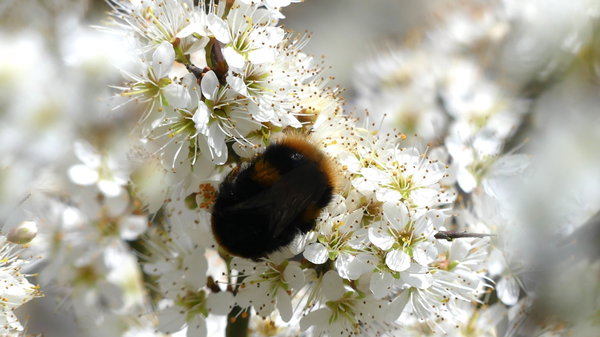
Bumblebee visiting the blackthorn blossom.
It is well known that the spines, with which blackthorn is richly endowed, can swiftly 'go bad' if you are unlucky and get one in your finger. As a result they are thought to contain a poison, but I've been told the redness and swelling is actually caused by bacteria on the bark: as hawthorn spines don't produce a similar reaction - at least in me - it may be that the bacteria are species specific and we are allergic to those on blackthorn, or they interact in some way with the bark to produce a toxin, however I am happy to be told otherwise.
Hawthorn, unlike blackthorn, comes into leaf before flowering and is doing so rapidly. An expanding green welcome for the willow warbler, the first summer migrant to arrive in the hedge. He is setting up his territory and, while spending most time in it he is also crossing the lane to sing in the hedge and taller trees on the other side as well. I assume having a roughly circular territory is easier to defend than a long, thin one, which would be the case if he was to remain entirely in my hedge and it will undoubtedly ensure him, his future mate and their resulting young a varied and plentiful food supply.
The female will build a domed nest on the ground with a side entrance using nearby grasses and other soft vegetation which she will line with feathers in, or close to, the hedge bottom amid the grasses and herbaceous plants now growing apace along both sides and, where most light penetrates, under the bushes as well.
This growth provides not only cover for the nest, but by reducing wind speed and maintaining higher humidity around the base of the bushes creates suitable conditions for many species of insects and invertebrates on which the birds will feed.
In this world of tiny creatures there are herbivores and carnivores, those eating the vegetation being eaten by the predatory species, which include spiders - and many are potential meals for the warblers: the food web, even in this small area is truly amazing!
A hedge is, or should be so much more than a line of bushes to be of significant value to wildlife.
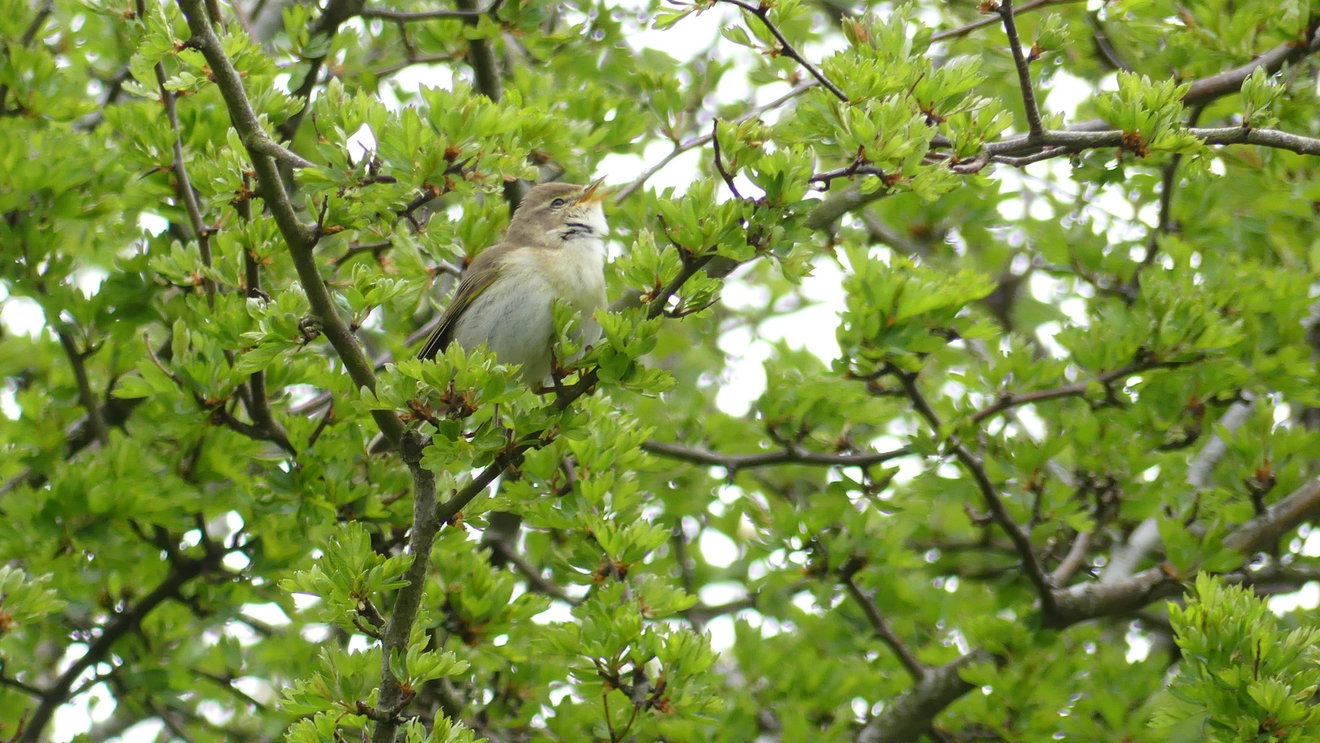
The willow warbler singing
Mice and voles also live under the hedge, making little tunnels in the surface soil and through the grasses, where some will build breeding nests.
There are no signs of moles; I expect they consider it too difficult to tunnel through the maze of roots.
Rabbits are appearing in increasing numbers, more than I've ever seen in the ten years I've owned the ground. They are digging burrows on the embankment clear of the majority of roots. As I am not trying to grow any crops in the adjacent field their presence is of no concern, indeed they are welcome: they and the small mammals are potential prey for stoats, weasels, foxes and the buzzards which are often cruising around.
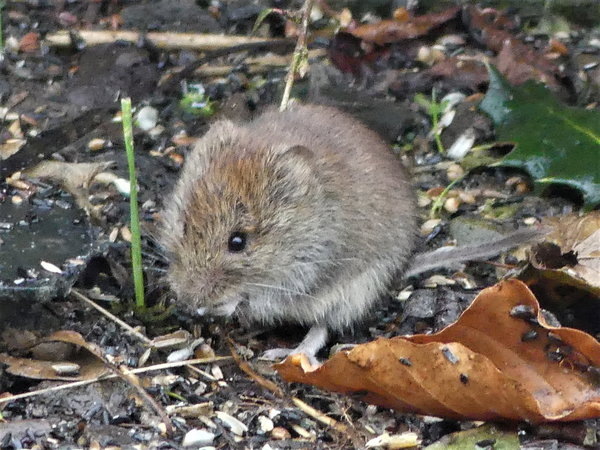
A bank vole
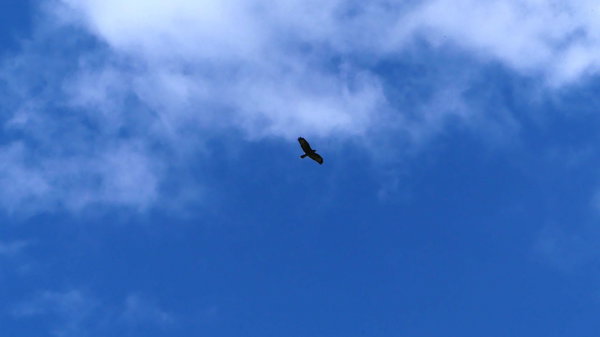
A buzzard soaring
My hedge has been growing long enough to be considered established, and as such the bushes are being gradually colonised by other plants. Mosses grow on the ground and the lower part of their stems, happy in the shady, humid conditions; lichens are colonising their higher, drier parts, while a variety of fungi grow in a symbiotic relationship with their roots.
Other fungi, one of the rusts have appeared on the stems of dog rose and it doesn't take much imagination to see why they are so named: they really do resemble patches of active rust. There are a large number of rusts, some are generalists, some specific to one host while others bizarrely require two apparently unrelated species to complete their life cycle. This is the one you may find on your garden roses and bears the scientific name Phragmidium mucronatum.
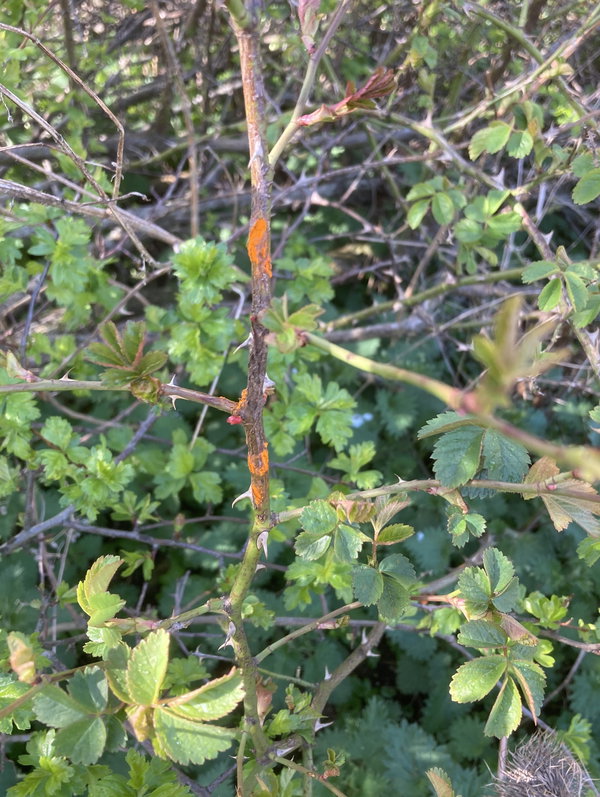
Rust fungus on a dog rose stem
The sun rises before six o'clock now, and to hear the best of the dawn chorus means getting up and out early: along the hedge the voices of resident hedge sparrow, robin, chaffinch, blackbird and the merry willow warbler have now been joined by a chiff-chaff, the second summer migrant to arrive.
I also saw - but didn't hear - a Reed bunting, which appeared briefly in one of the spreading blackthorn patches: they are by no means, as their name would suggest, confined to reedbeds.
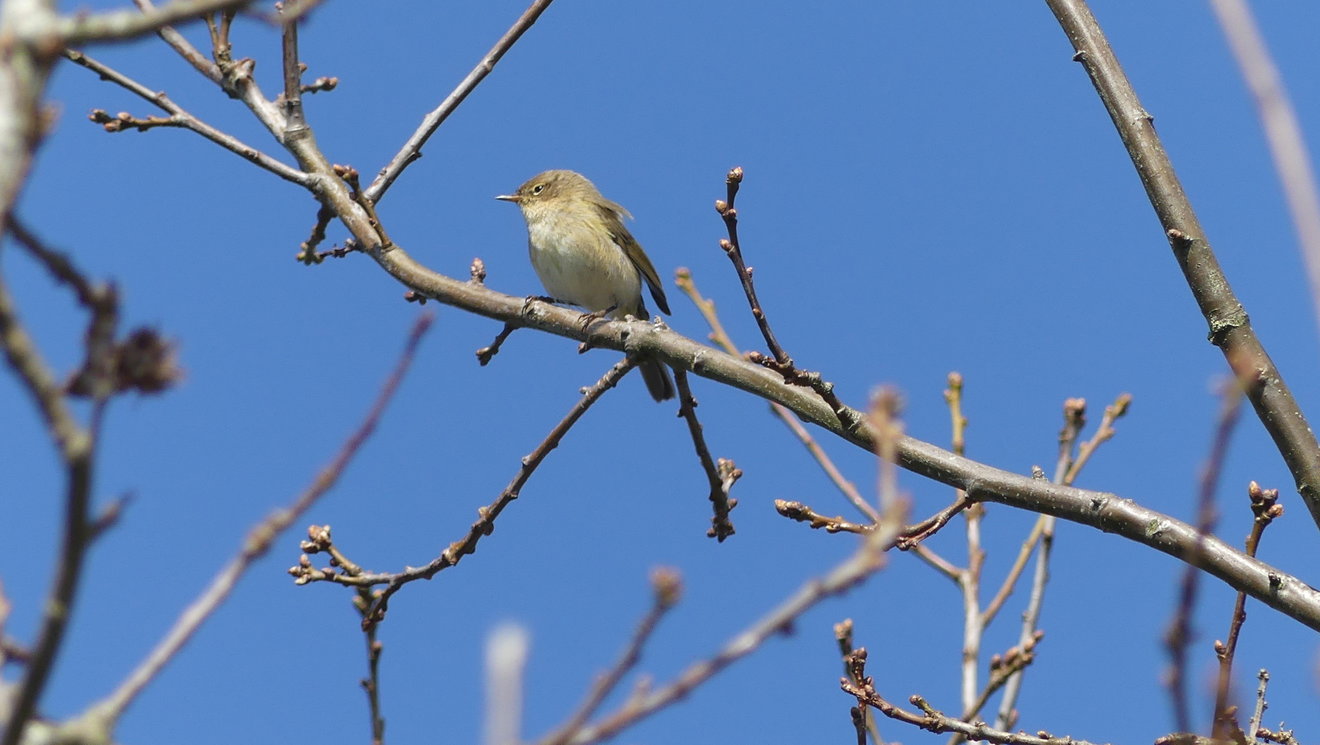
A chiff-chaff
One of the small feathered denizens is constructing a nest in the top of a blackthorn, but only with the assistance of a drone will it be possible to see who, or alternatively spend possibly quite a long while watching from a distance to discover the identity of the builder.
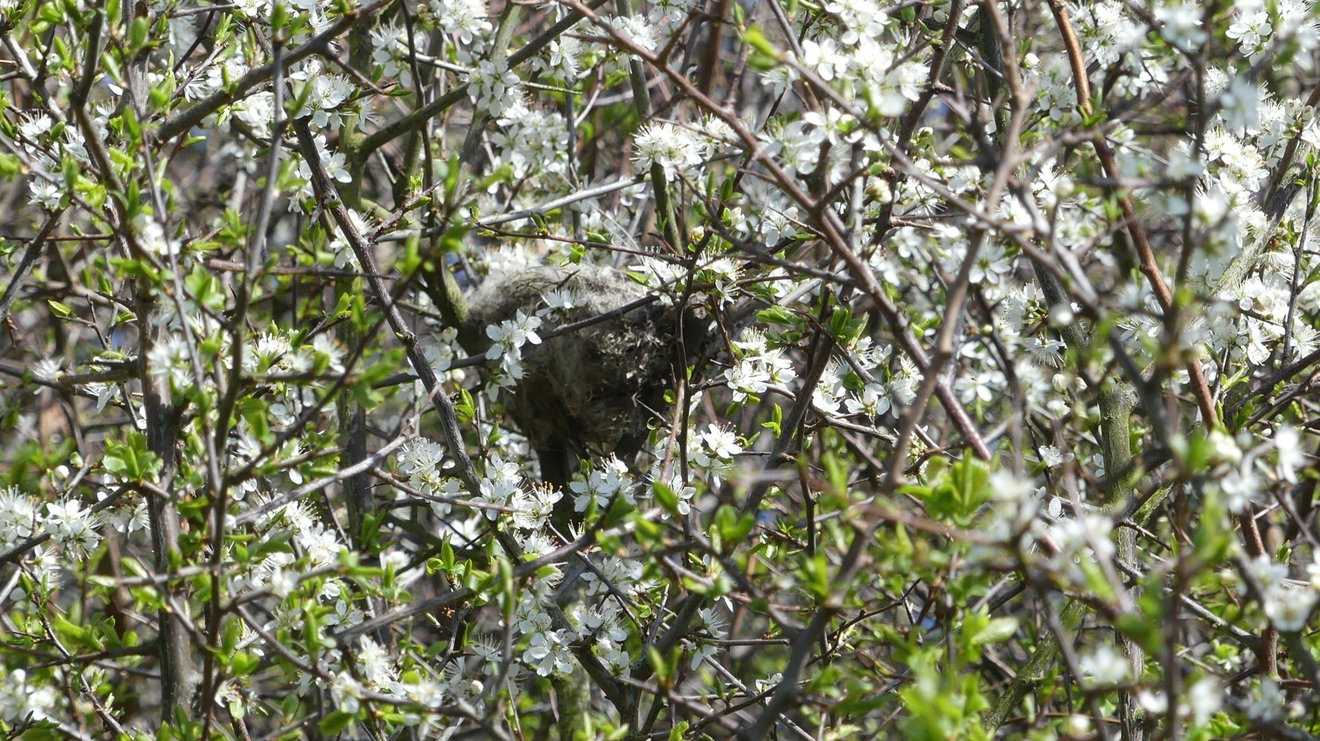
New nest in the top of the blackthorn